

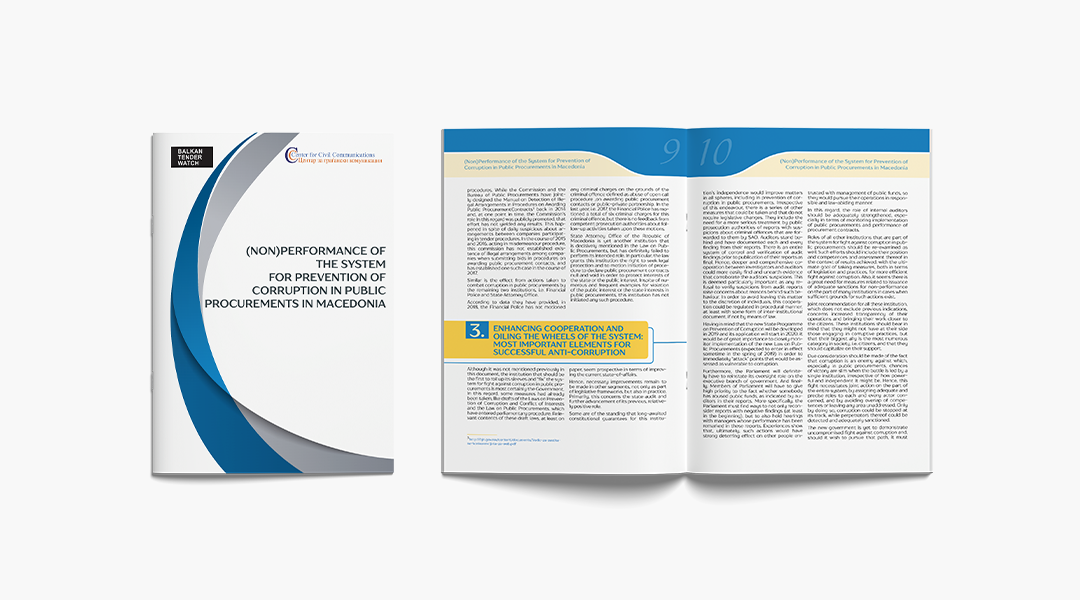
Tender procedures, a term popularly used for public procurements, are yet another area prone to corruption, if not the area most susceptible to corruption. According to global estimates, corruption accounts for 10% to 30% of the total value of all procurements. A simple math exercise shows that if public procurements in Macedonia account for up to one billion euros on annual level, then corruption “devours” 100 to 300 million euros of taxpayers money in Macedonia every year. For these reasons, Macedonia – as many other countries – has established a multitude of system institutions and has assigned them a particular role in the fight against corruption in public procurements, at least according to regulations and laws in effect. As is the case in to many other areas, the system in place has grossly underperformed.
One of key generators behind the lukewarm efforts to fight corruption and, in general, abuses/malpractices of any type in public procurements concerns lack of any control or oversight whatsoever over implementation of public procurements. No control mechanisms are in place about which entity, for which purpose and how much plans to procure, how that is procured and, finally, whether what has been procured is worth the money spent and guarantees complete and purposeful fulfilment of procurement needs.
In the course of years, it has become more than obvious that the lack of control over implementation of public procurement procedures has been deliberate. There are numerous examples of violations to the Law on Public Procurements, both insignificant and significant. On the other hand, there are only a handful of examples for adequate sanctions imposed to perpetrators thereof.
You can read more about Policy paper in Macedonian and English language
For more information, please contact the Center for Civil Communications at (02) 3213-513 or at center@ccc.org.mk.
This publication is developed with financial support from the European Union, as part of the project “Balkan Tender Watch”.