


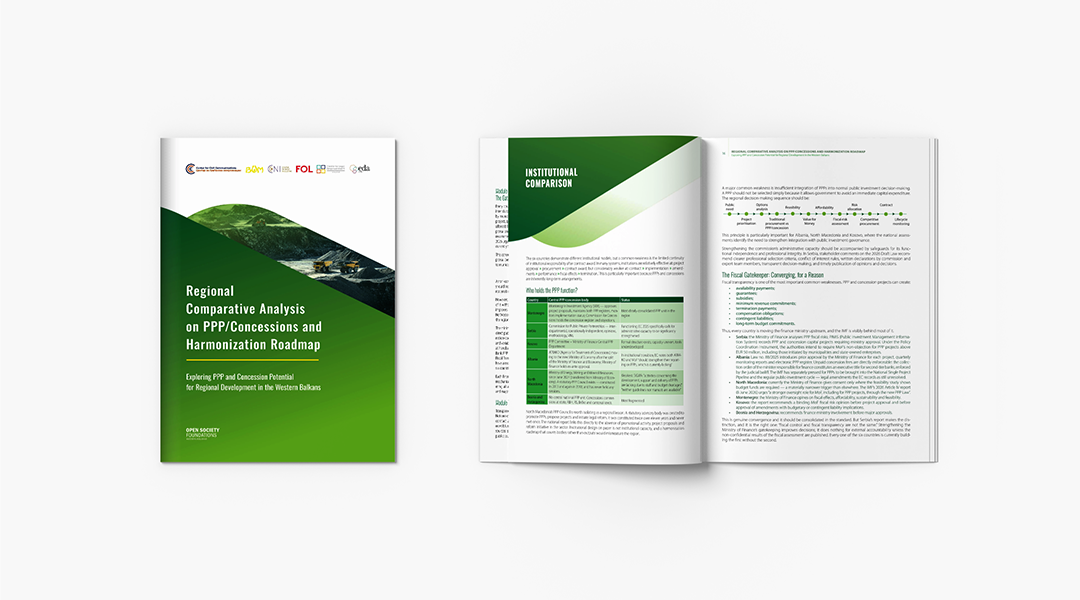
The national reports were explicitly designed to feed into a regional comparative analysis, harmonisation roadmap, and concept for interoperability between PPP/concession databases and public procurement systems.
The national reports were explicitly designed to feed into a regional comparative analysis, harmonisation roadmap, and concept for interoperability between PPP/concession databases and public procurement systems.

Through the Registry of Beneficial Ownership, ownership of companies by politically exposed persons (mayors and ministers) has been identified, which had not been reported in the interest declarations submitted to the State Commission for Prevention of Corruption (SCPC). 41 out of the 360 analyzed former and current officials appear as beneficial owners in a company; 23 of these officials fully or partially concealed their shares in companies when submitting their interest declarations to the SCPC....

There are no translations available. Денес, 24 април 2025 година, Центарот за граѓански комуникации го објави истражувањето и базата на податоци за фирмите коишто се на списокот што го објави Министерството за транспорт и врски за одземање на нивните лиценци за градежно работење и урбанистичко планирање, а по спроведените контроли и трагичниот настан во Кочани. Истражувањето открива дека: Лиценци ќе им се одземат на 426 фирми, бидејќи од 479-те фирми на списокот има некои што се повторуваат, а други...

Податоците од регистарот на вистински сопственици во земјава не се користат за борба против корупцијата

There are no translations available. The research can be downloaded in Macedonian, Albanian and English language Целта на истражувањето е согледување на состојбите со инспекцискиот надзор во единиците на локална самоуправа. Истражувањето е поттикнато од ризиците од корупција поврзани со инспекцискиот надзор кои ја наметнуваат неопходноста од анализирање на постоечките практики, детектирање на проблемите и изготвување соодветни препораки со цел зголемување на транспарентноста и интегритетот на овие процедури. Ова истражување е спроведено во осум таргетирани...

Ниту една од мониторираните општини не презема други активности за информирање на граѓаните, односно донесените одлуки за продажба на земјиште и склучените договори со купувачите не ги објавуваат ниту на своите веб-страници.

За десет години, бројот на студенти е намален за 7.000, секој петти студент сака да биде лекар

Само за десет години бројот на ученици во основните и во средните училишта во земјава е намален за 27 илјади, односно за 10%. Бројот на средношколци е намален за 20 %, односно за повеќе од 17 илјади ученици.

Кубик вода за пиење во боговиње плаќаат по 7,5 денари, а во кочани по 49 денари

Целта на истражувањето е да се мапираат актуелните практики во однос на издавањето на Б-интегрираните еколошки дозволи, пред сè поради нотираните зголемени проблеми со заштитата на животната средина во државава.

There are no translations available. Истражувањето спроведено во 96 основни и средни училишта во 8 општини во земјава открива дека набавките за осигурување, за униформи за учениците, за фотографирање, за ужина итн. се спроведуваат во постапки за кои нема јасно дефинирани правила кои би овозможиле избор на најповолните понуди и најдобра вредност за потрошените пари. Јавни огласи се објавуваат само за екскурзиите, бидејќи МОН за нив има донесено процедури уште во 2014 година. Најголем дел...

Наспроти законски предвидениот плански период од 10 години, во дел од општините ГУП-от не е сменет и по повеќе од 20 години.

Во просек, општините во 2022 година доделиле за здруженијата на граѓани само 0,1 % од своите буџети.

Shadow Reports from Monitoring Work and Effects of Sector Working Groups in 2019, 2020 and 2021 were developed under the hypothesis that SWGs are important bodies responsible for sector policy creation and monitoring in the Republic of North Macedonia and serve as forum for coordination of donor support for policy implementation. Shadow report from monitoring work and effects of the sector working group on public finance management, january – december 2021 Shadow report from...
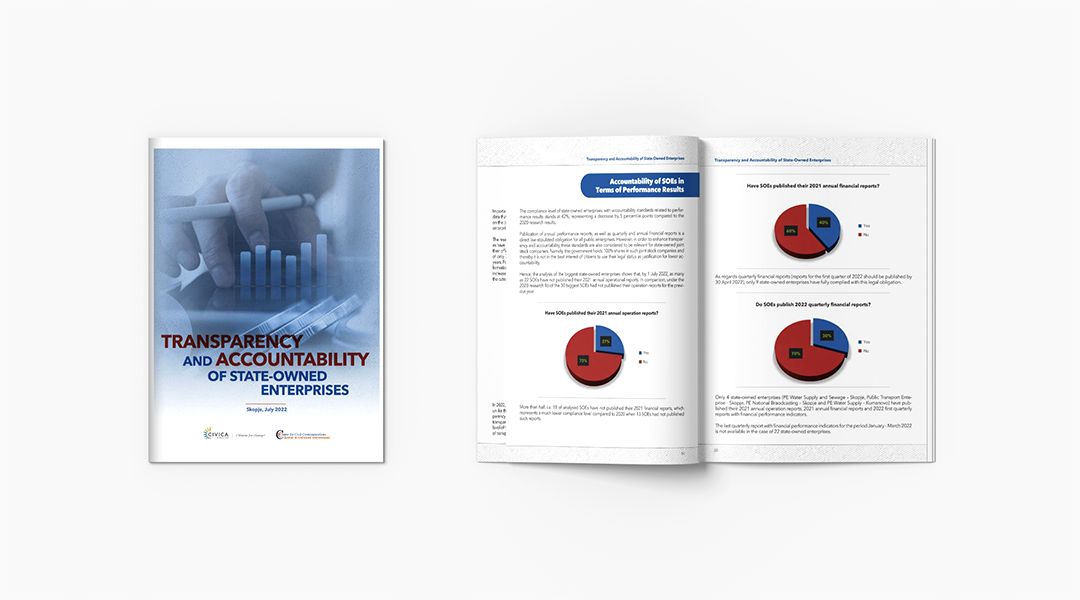
The 30 biggest enterprises founded by the government and local self-government units publish only 48% of information and documents they are obliged to share on their official websites.
Standards that are used to assess transparency and accountability demonstrated by state-owned enterprises were selected on the basis of analysis of relevant legislation and international standards. Hence, dominant share of selected standards are legally binding for all state-owned enterprises, while small share of them are standards that are considered good practices.
Although procurements implemented under negotiation procedure without previous announcement of call for bids are subject to obtaining previous opinion from the Bureau of Public Procurements, they can also be implemented directly, i.e. without obtained opinion, in compliance with Article 55, paragraph (6), which stipulates that: “As an exemption from paragraph (5) of this article, the contacting authority shall not be obliged to obtain a previous opinion before implementation of negotiation procedure without previous announcement of call for bids, pursuant to paragraph (1), item d) of this article when the safety, life and health of people are directly threatened”.
For 15 years already, the Center for Civil Communications struggles daily to secure information in order to enable citizens, companies, interested individuals and groups to have fast, easy and free access to information and documents they need and are disposed by state institutions.
6,7 million euros contracted under urgent public procurements for coronavirus protection, only in the first six months of the crisis.
Transparency is a broadly accepted underlying principle in public procurements. It promotes competition, increases efficiency of public spending and reduces risks of corruption in public procurements.
This is the second media monitoring report, the first being published in 2016. The monitoring covers the investigative and analytical articles and stories published by the media and aims to provide sufficient quality and relevant information to enable the assessment of incidence and quality of investigative and analytical journalistic articles, subject matters and fields covered by those articles. At the same time, the findings should provide the basis for design and planning of series of actions aimed at improved media reporting in general. The report may help journalists and media outlets to identify and locate the weaknesses in their reporting and as a roadmap to improved reporting. NGOs, on the other hand, may use the analysis as indicator for the areas in which enhanced engagement may be needed to ensure more regular, professional and objective information to the public. he monitoring of media reporting that aims to assess the quantity and quality of investigative and analytical reporting is implemented under the auspices of the “Investigative Reporting for Promotion of Reforms” Project, financed by the European Union. The aim of the Project, which is implemented from 2016 to 2019, is to promote and stimulate the growth of accurate and investigative reporting with the purpose to contribute to better informed public and protection of public interest. In other words, the goal is to stimulate the editorial offices and newsrooms and their journalists to dedicate greater attention to in-depth, more substantial analysis of problems and issues, thus separating themselves, quality wise, from the influx of short, fast, superficial...
This is the second media monitoring report, the first being published in 2016. The monitoring covers the investigative and analytical articles and stories published by the media and aims to provide sufficient quality and relevant information to enable the assessment of incidence and quality of investigative and analytical journalistic articles, subject matters and fields covered by those articles. At the same time, the findings should provide the basis for design and planning of series of actions aimed at improved media reporting in general. The report may help journalists and media outlets to identify and locate the weaknesses in their reporting and as a roadmap to improved reporting. NGOs, on the other hand, may use the analysis as indicator for the areas in which enhanced engagement may be needed to ensure more regular, professional and objective information to the public. he monitoring of media reporting that aims to assess the quantity and quality of investigative and analytical reporting is implemented under the auspices of the “Investigative Reporting for Promotion of Reforms” Project, financed by the European Union. The aim of the Project, which is implemented from 2016 to 2019, is to promote and stimulate the growth of accurate and investigative reporting with the purpose to contribute to better informed public and protection of public interest. In other words, the goal is to stimulate the editorial offices and newsrooms and their journalists to dedicate greater attention to in-depth, more substantial analysis of problems and issues, thus separating themselves, quality wise, from the influx of short, fast, superficial...
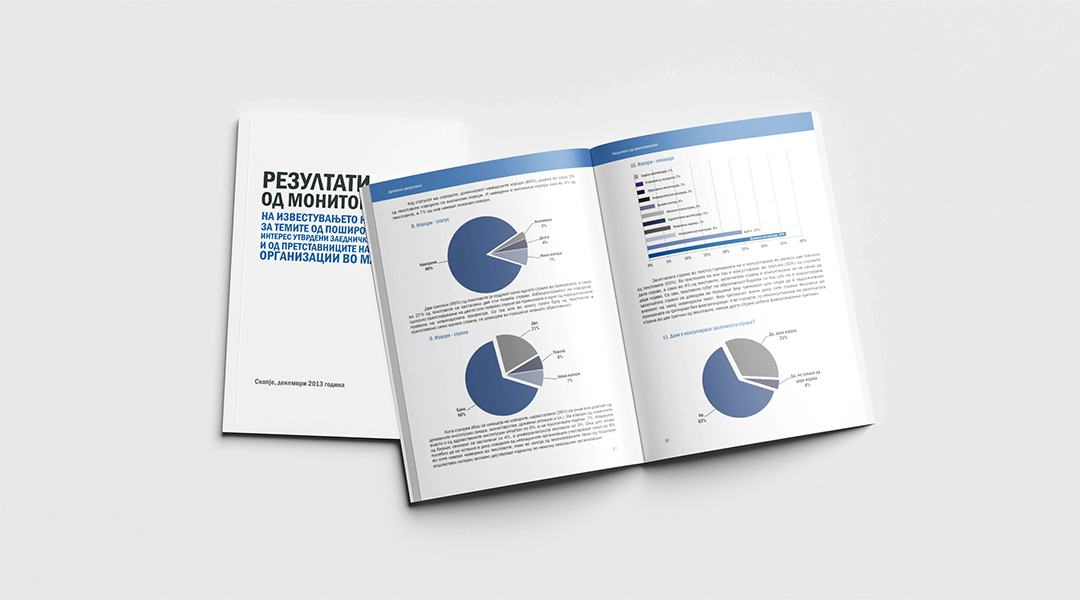
The media is one of the most important social instigators that citizens use to inform themselves on matters of public interest. It is the responsibility of the media to enable citizens to obtain all of the information they need to take a stance on important issues of concern.
The NGO Info-centre, in partnership with the Centre for Civil Communications from Skopje and the Educational and Humanitarian Organisation EHO from Štip, started the implementation of USAID’s Transparent Governance Project in 2009, led by the idea that there can be no democracy without good governance and that there can be no good governance without transparency and accountability.
Handbook for journalists for free access to public information - Legal Leaks Toolkit (in Macedonian)
Manual оn Reporting about Local Issues and Investigative Reporting
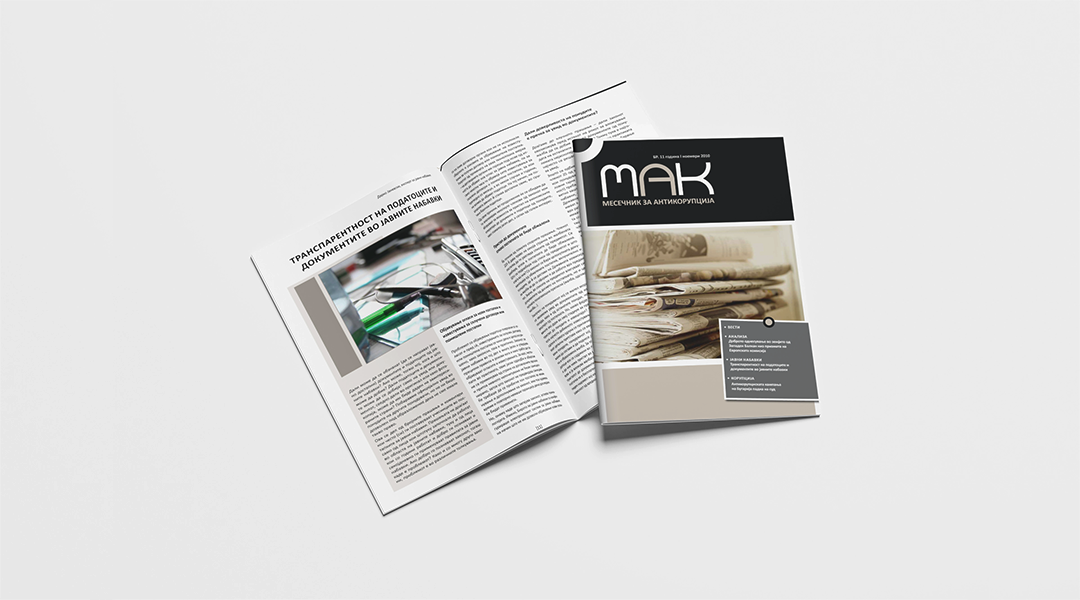
In this issue Two powerful institutions, the World Bank and United Nations took advantage of the International Anti-Corruption Day – December 9 – to send rather strong messages for strengthening the fight against corruption.
The project aimed at strengthening of civil society pressure on the authorities of the countries of the Western Balkans, in order to establish an efficient system of public procurement and accountability in the expenditure of public funds.
In this issueFormer minister of defense and deputy of the ruling party in Croatia and ex-US vice president are being investigated in corruption-related cases – the first one for alleged illegal public procurement and the latter for bribing a Nigerian national in business matters linked to natural gas.
In this issue The corruption has deeply entered the sport arena. Even the top sports are affected. The World Football Federation had to suspend two of its members from the top management after it was revealed that they sold their votes during the process of selecting the location for the next football world championship.
Corruption in the private sector and its combating is an increasingly debated topic worldwide, a topic that was tackled in one of the prior issues of the monthly newsletter.
In this issueAlmost hundred defendants, including former mayors, former city officials, entrepreneurs, lawyers and art dealers face possible jail terms amounting to a total of up to 500 years and fines totaling about one billion euros in Spain's biggest ever corruption trial.
In this issue Several non-governmental in Serbia have decided to ‘whistle’ against corruption. They have launched a special web portal that offers opportunity to citizens to report corruption, namely to blow the whistle, while journalists engaged in this project will further investigate these reports and alarm the public.
Корупцијата цвета во земјите од Западен Балкан. Неколку последни извештаи од релевантни институции наведуваат дека борбата против корупцијата во земјите од Балканот е само декларативна.
Just two months since you have read on these very same pages an exclusive interview with the leading regional anti-corruptioner, the head of Slovene Commission for Preventing Corruption and Chairperson of the Council of Europe’s Group of States against Corruption (GRECO), Drago Kos, we present yet another exclusive interview in this issue.
In this issue:You have the latest issue of the Anti-Corruption newsletter (MAK). First of all we wish to thank to all of those who responded to our poll by which we wish to hear how satisfied you are with our newsletter and collect your proposals, suggestions for its further development.
The Center for Civil Communications was established in April 2005 as a nongovernmental, nonparty, and nonprofit association of citizens. In the past five years we have been working every day on narrowing the room for corruption in Macedonia and promoting the principles of “good governance”, both on central and local level.
Starting from March 1 this year, every citizen of the European Union will be able to anonymously report any suspicion on fraud and corruption on Internet, through the new electronic system of the European Anti-Fraud Office (OLAF).
Corruption is a problem in the countries in our immediate surroundings. This issue provides a deeper insight in the situation in Kosovo. The anti-corruption agency in Kosovo has filed charges against 159 officers on suspicion of corruption.
There are no translations available Препораки за унапредување на транспарентното и отчетното локално владеење
In the course of our everyday work, we and the experts we cooperate with arrive at numerous information regarding corruption and anticorruption practices in our country, as well as the countries in the region and the world.
Monitoring of the media reporting on corruption in Macedonia 2009 The articles on corruption published from January 1 to December 31, 2008 in five daily newspapers (“Dnevnik”, “Vecer”, “Vreme”, “Utrinski Vesnik”, and “Fakti” 1) were subject to direct monitoring.
One of the main goals of decentralisation is to make the local authorities more responsive to the needs of the local communities. Still, six years after the start of the process, surveys show that citizens remain unsatisfied with the manner in which the local self-government deals with their problems and how it organizes the life and work of local communities.
Results of the survey of existing practices in municipalities in Eastern Macedonia: Štip, Strumica, Sveti Nikole and Vinica The NGO Infocentre, Centre for Civil Communications and EHO implement the „USAID Project for Transparent Governance“, in the period September 2009-August 2012.