


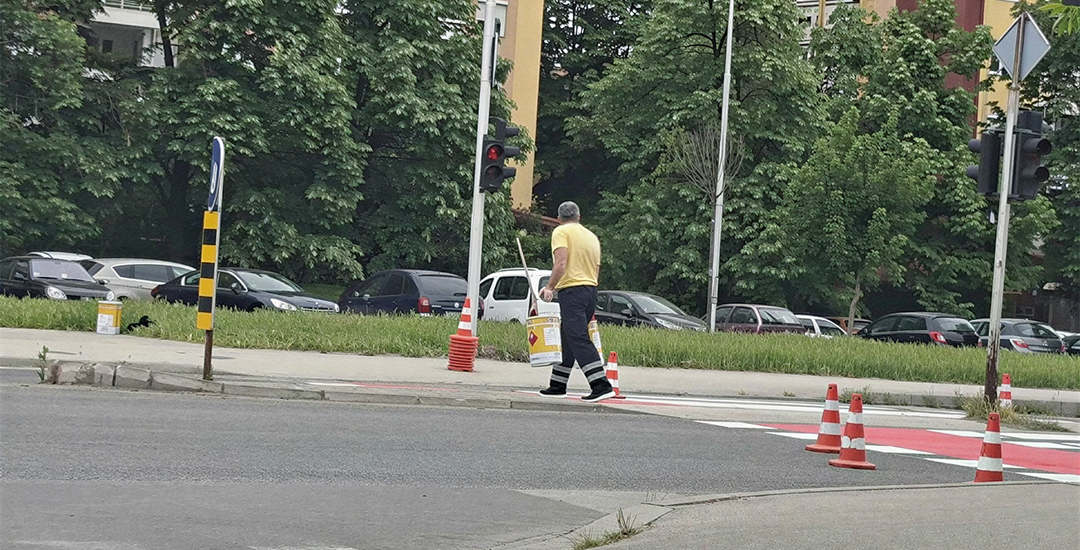
Тендери за невидливи пешачки премини
Тендери за невидливи пешачки премини
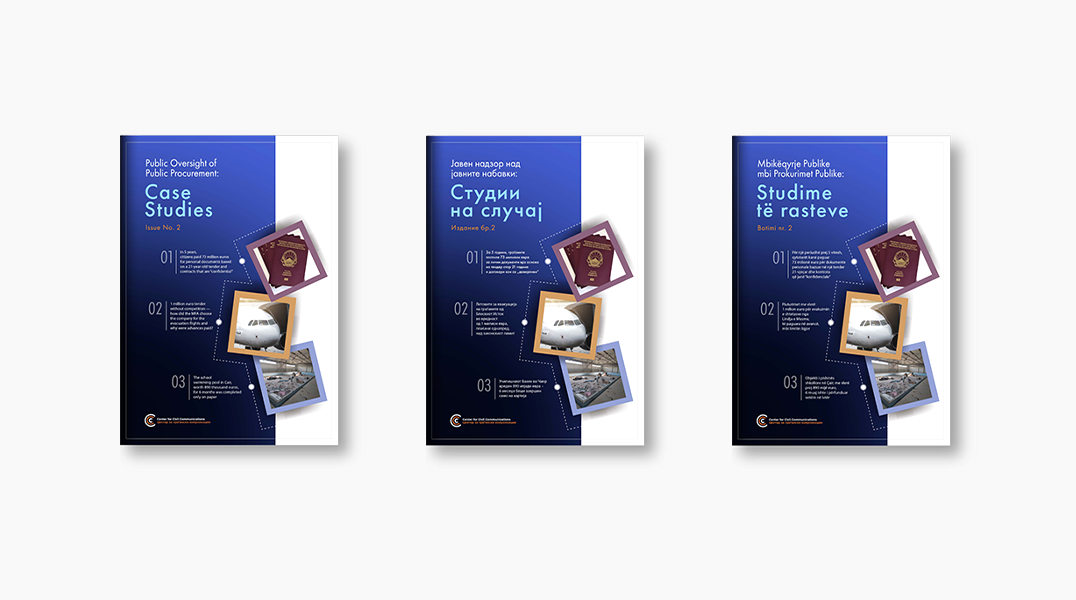
Confidential contracts, illegal advance payments and questionable implementation
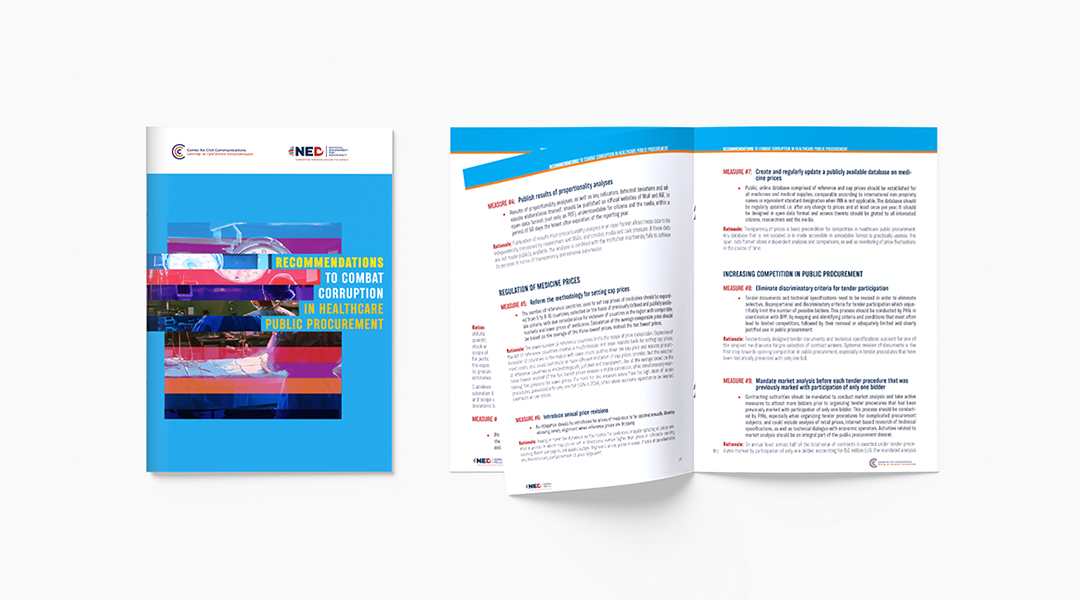
The public healthcare sector in the country is facing a continuous and growing gap between public funds spent and results delivered. In the last 10 years, healthcare costs incurred under public procurement have significantly increased; however, the scope of services, efficiency and accountability remain the same or are declining. Such discrepancy opens a series of dilemmas about the manner in which public funds in the healthcare sector are spent and controlled. The three research analyses...
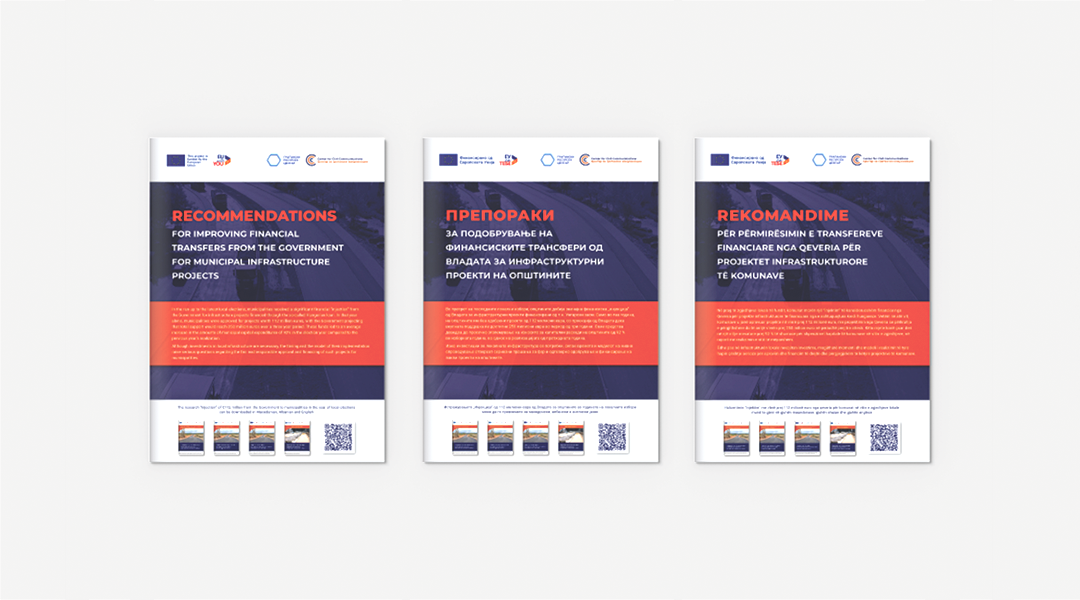
Потребно е поправично и поодржливо финансирање на локалната инфраструктура
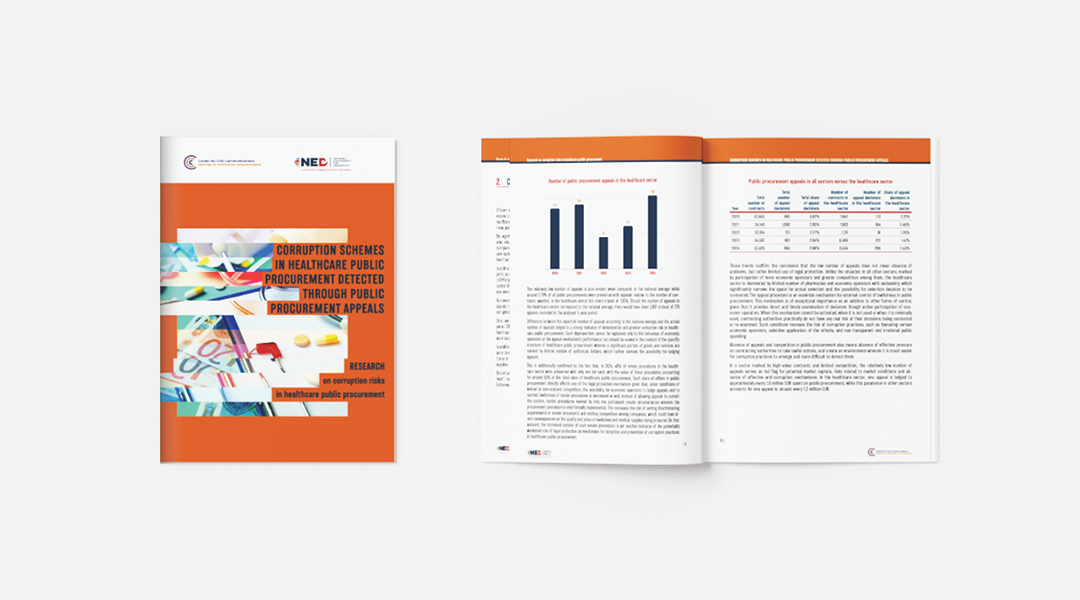
In particular, the research shows that in 71% of all cases, appeals lodged by the companies contest the decision on selection of the most advantageous bid, which shows that the main source of dispute arises from the bid-evaluation process as the procedure stage marked by the highest risk of favouring particular bidders. The analysis of appeals indicates that public healthcare institutions often engage in imprecise evaluation of bids received and apply inequitable criteria for that...

The research Public Oversight of Public Procurement: Case Studies (Edition No. 1) analyzed specific cases of potentially illegally conducted tender procedures in which the care of public funds was not primary. The following three tenders were covered: With a tender worth 1.5 million euros, food for citizens at social risk is being distributed on the streets instead of in soup kitchens in Skopje The endless reconstruction of the former Komercijalna Banka building: 51 annexes and...
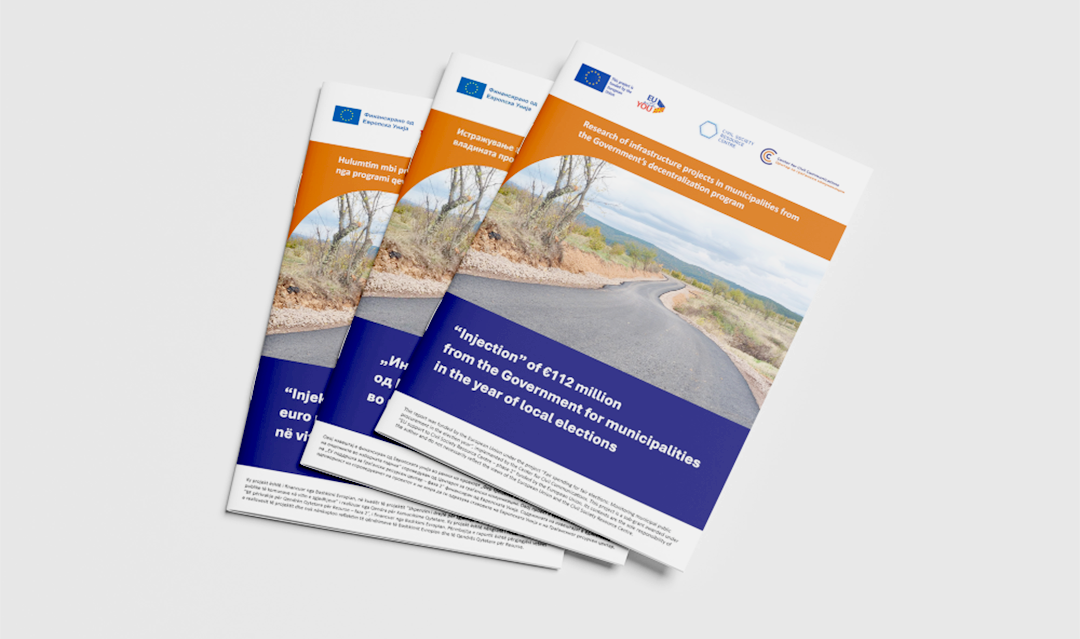
„Инјекција“ од 112 милиони евра од Владата за општините во годината на локалните избори
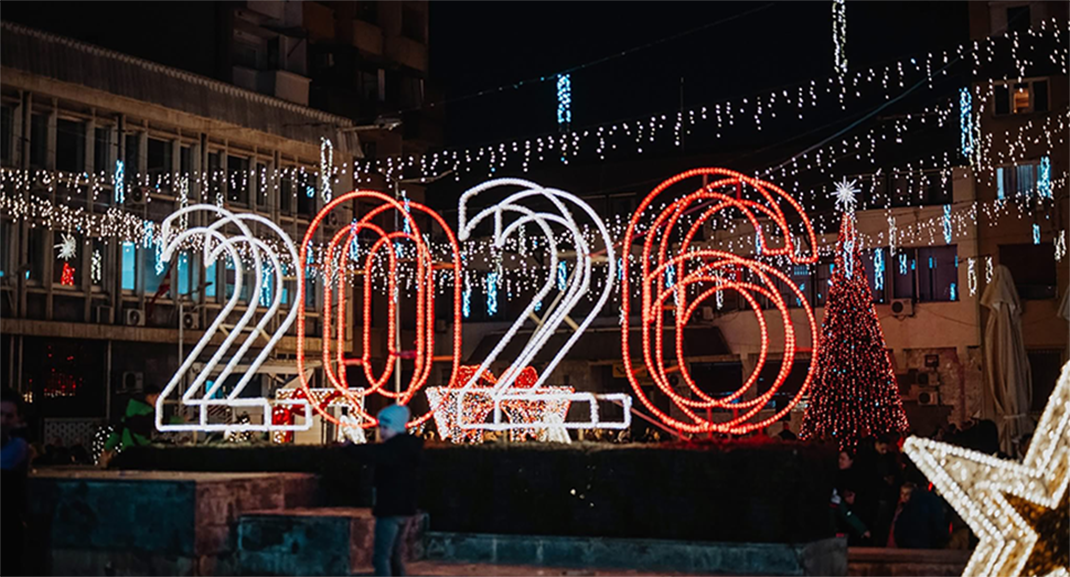
За новогодишно украсување општините потрошиле 785 илјади евра, 78% од вредноста е концентрирана кај една фирма
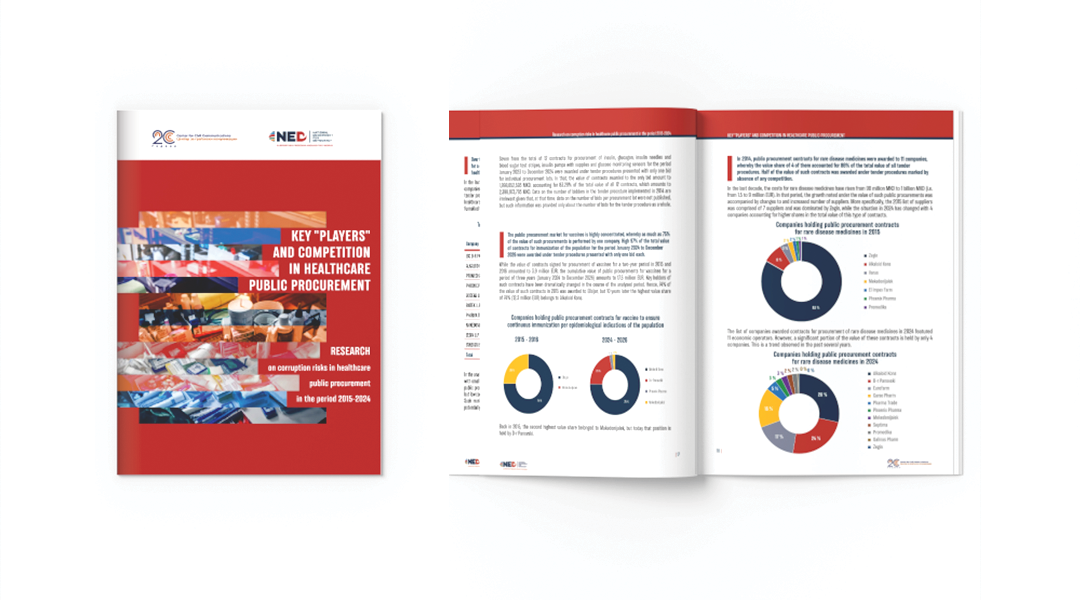
The research showed that in the last decade, the value of healthcare public procurement contracts has increased by more than double, while the number of economic operators awarded such contracts was increased by only 12%, which indicates a concentration of funds among a limited number of suppliers. With the growth in the value of tenders, the share of the ten largest holders of public procurement contracts has decreased from 62% in 2015 to 49% in...
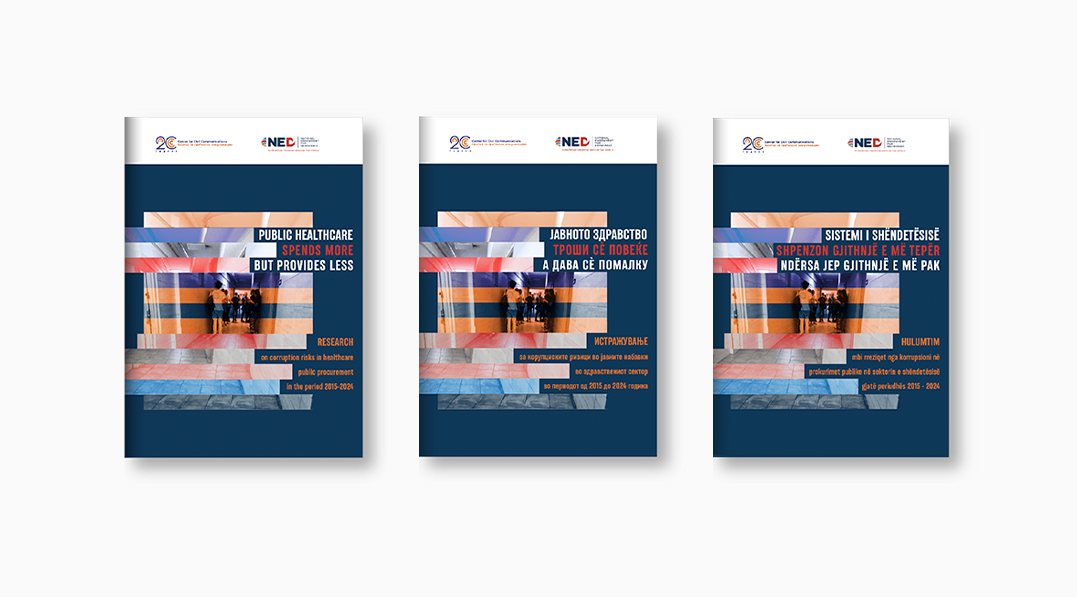
Public healthcare spends more but provides less
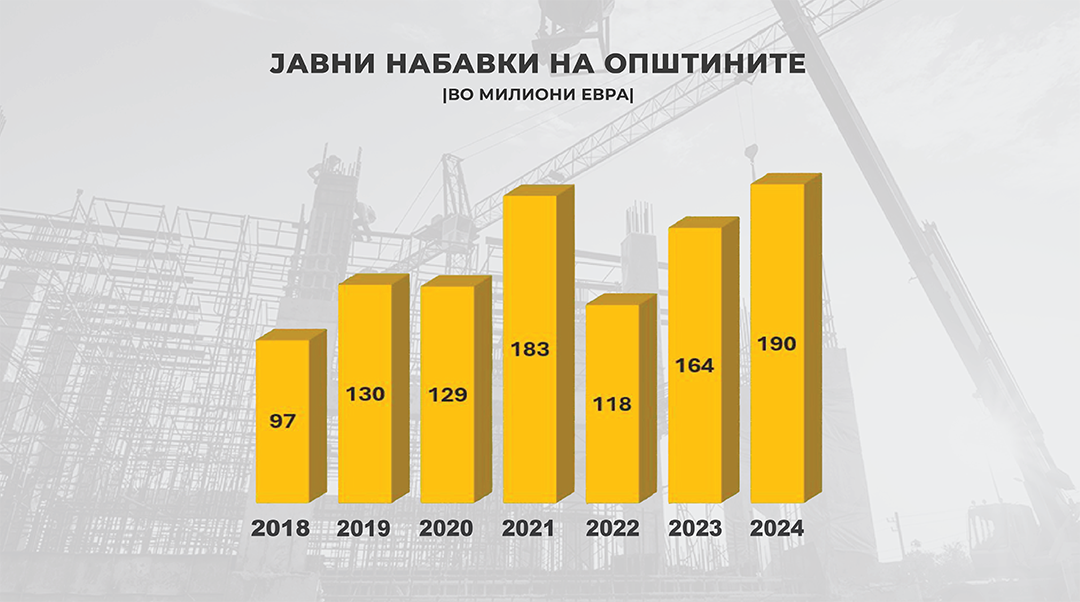
Општините лани потрошиле рекордни 190 милиони евра на тендери, Град Скопје за првпат не e прв на листатa

За две години, државните институции набавиле нови возила за 8,5 милиони евра

3,5 милиони евра за снегот и мразот по улиците, но сумата допрва ќе расте
Само 10 фирми, за 5 години добиле тендери за 1 милијарда евра

Студии на случај за проблематични јавни набавки во општините во кои се спроведе граѓанскиот мониторинг: Битола, Штип и Кичево
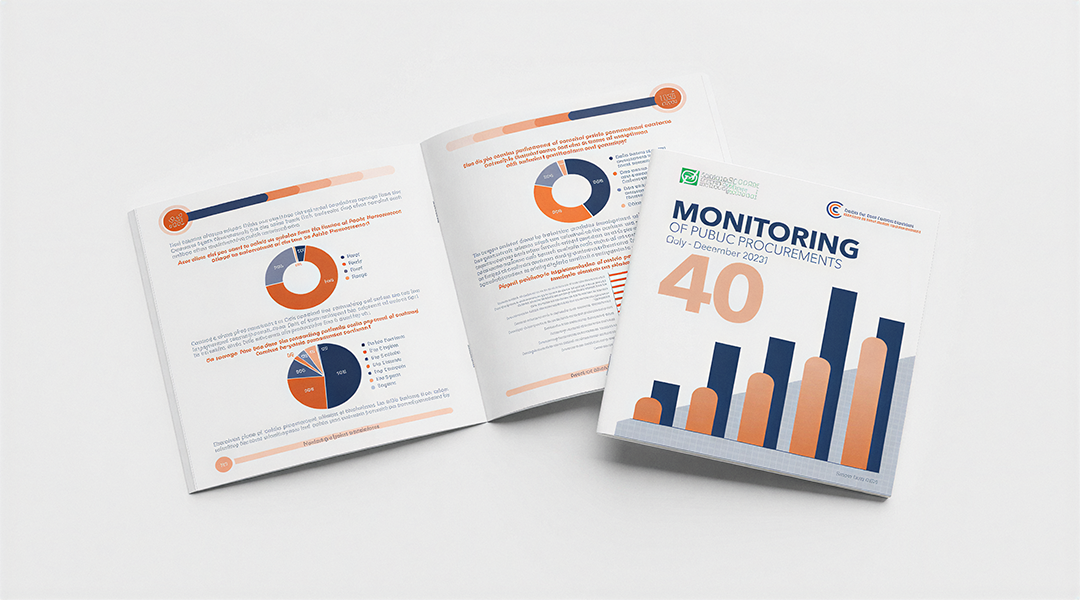
The Center for Civil Communications (CCC) regularly monitors and analyses implementation of public procurements in the country, starting from 2008 when the first legislation on public procurement drafted in compliance with the European Commission’s Directives entered into effect.

The report from the regular monitoring of public procurement, which includes surveys with companies and representatives of state institutions; - The Index of rationality where the prices at which different institutions procured exactly the same products or services are compared and - The database on public procurement of municipalities for 2023.

In the Republic of North Macedonia, public procurements account for 24% of the state budget and 8% of the gross domestic product.
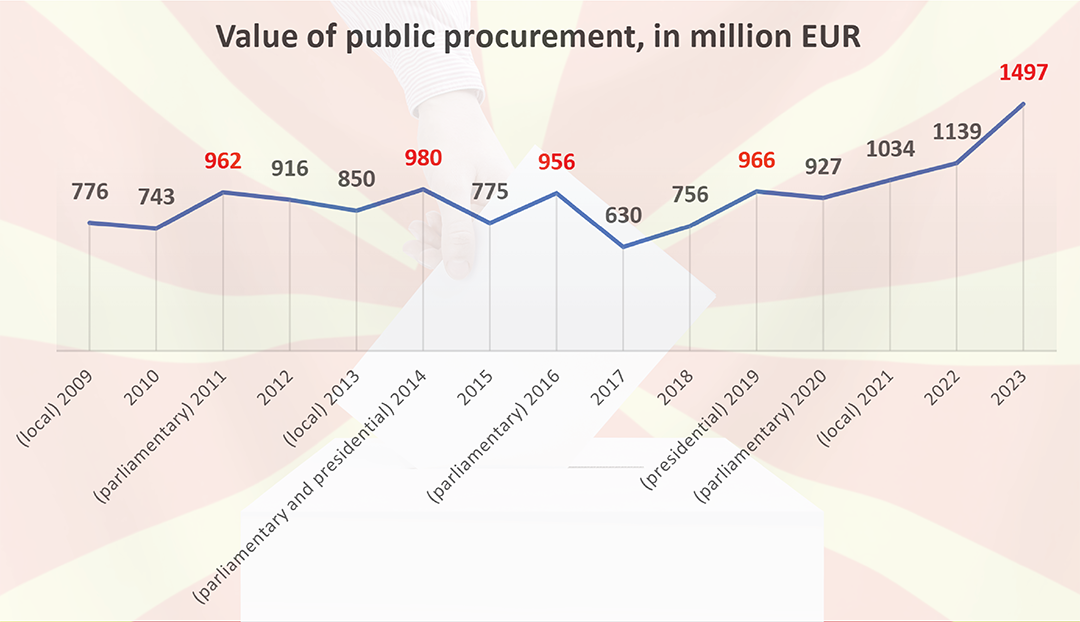
Center for Civil Communications published the Elections and Public Procurement Research. The research showed that: - Tender procedures organized by SEC and related to this year’s joint presidential and parliamentary elections have costed by 767 thousand EUR more than the sum of all tenders for the same type of elections held individually in 2019 and 2020.
In the first half of 2023, every third public procurement contract was awarded in tender procedure marked by participation of only one company.
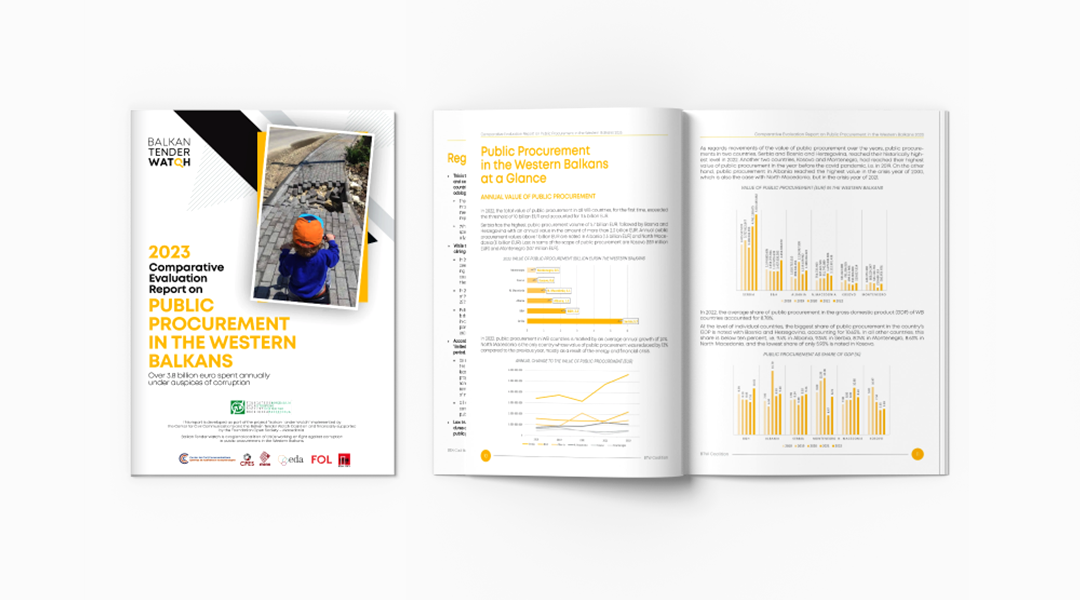
This is the seventh annual Comparative evaluation report on state-of-affairs in public procurement in the Western Balkans developed by the Balkan Tender Watch, a regional coalition of civil society organizations working on fight against corruption in public procurement.
The Center for Civil Communications (CCC) regularly monitors and analyses implementation of public procurements in the country, starting from 2008 when the first national legislation on public procurements drafted in compliance with the European Commission’s Directives entered into effect.

База на податоци на сите тендери на општините и Градот Скопје за 2022 година.
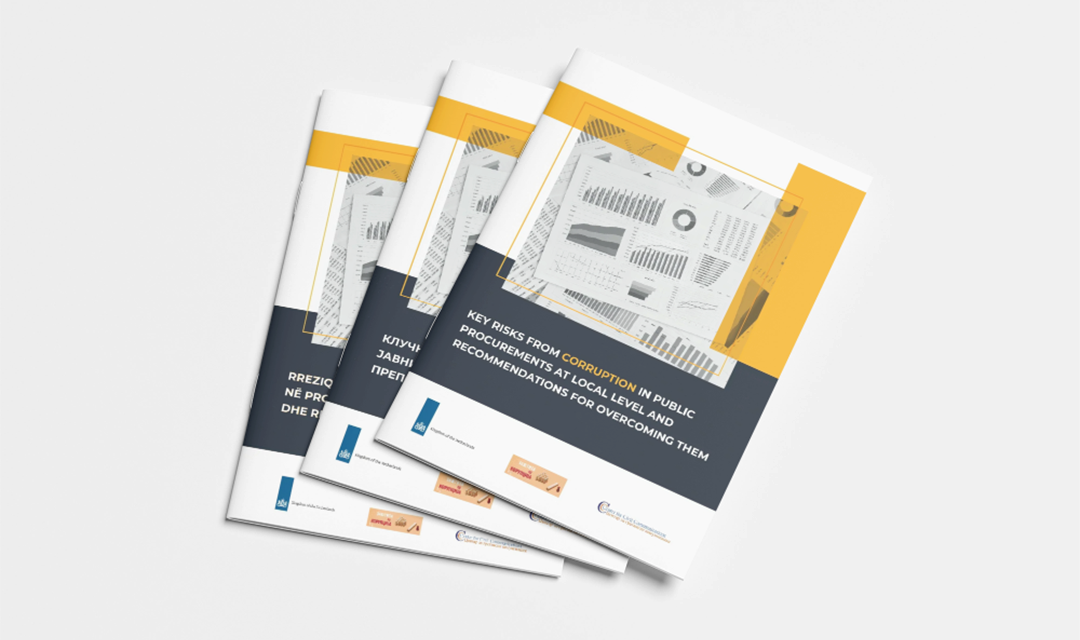
The purpose of this policy paper is to summarize the key corruption risks and recommendations for overcoming them
The right to discretionary proceeding in terms of implementation of environmental protection standards most certainly provides fertile ground for external influences and, accordingly, for corruption.
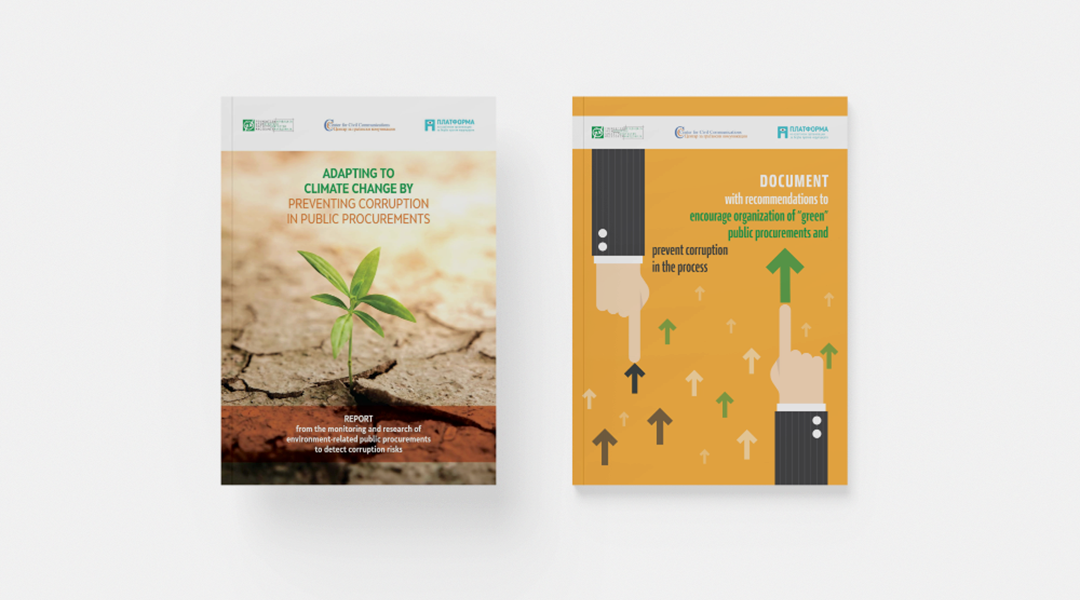
Center for Civil Communications (CCC) published the Report of the research on public procurement related to environmental protection to detect the risks of corruption and the Document with recommendations to encourage implementation of "green" public procurement and prevent corruption in the process.
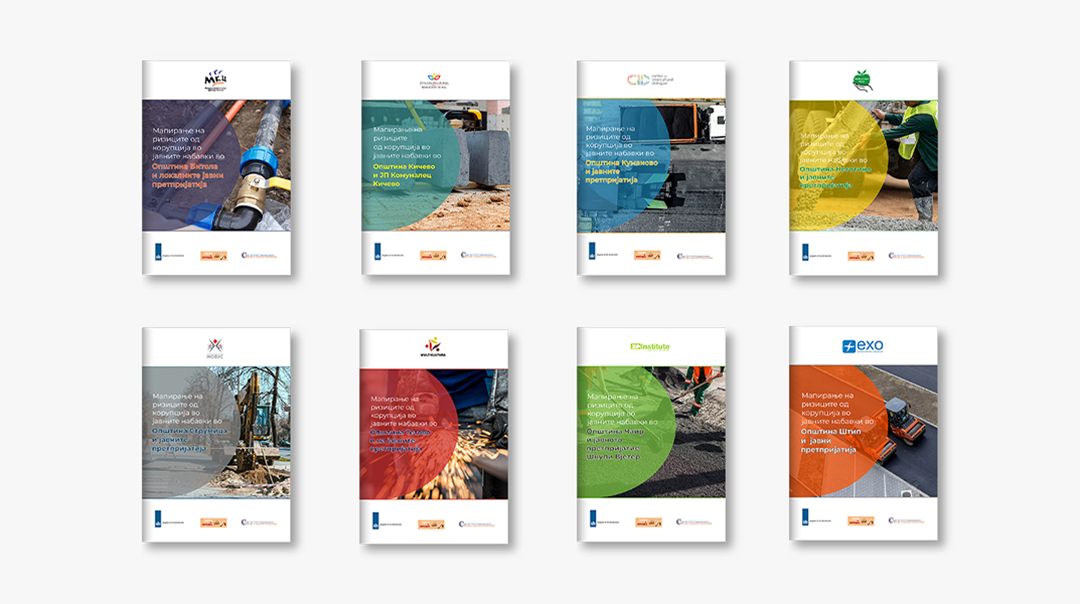
A network of nine non-governmental organizations led by the Center for Civil Communications made an assessment of the risks of corruption in public procurement in eight municipalities of the country: Bitola, Kichevo, Kumanovo, Negotino, Strumica, Tetovo, Chair and Shtip. The research focused on public procurement carried out by municipalities and local public enterprises.
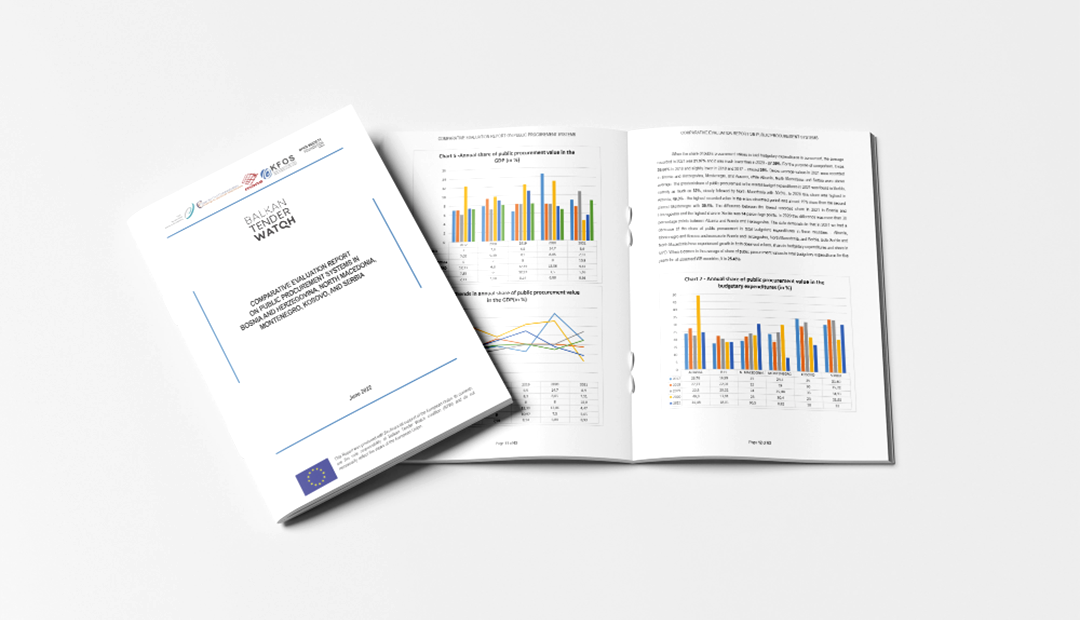
This Report represents the compilation of evidence-based finding and views of the Balkan Tender Watch coalition.
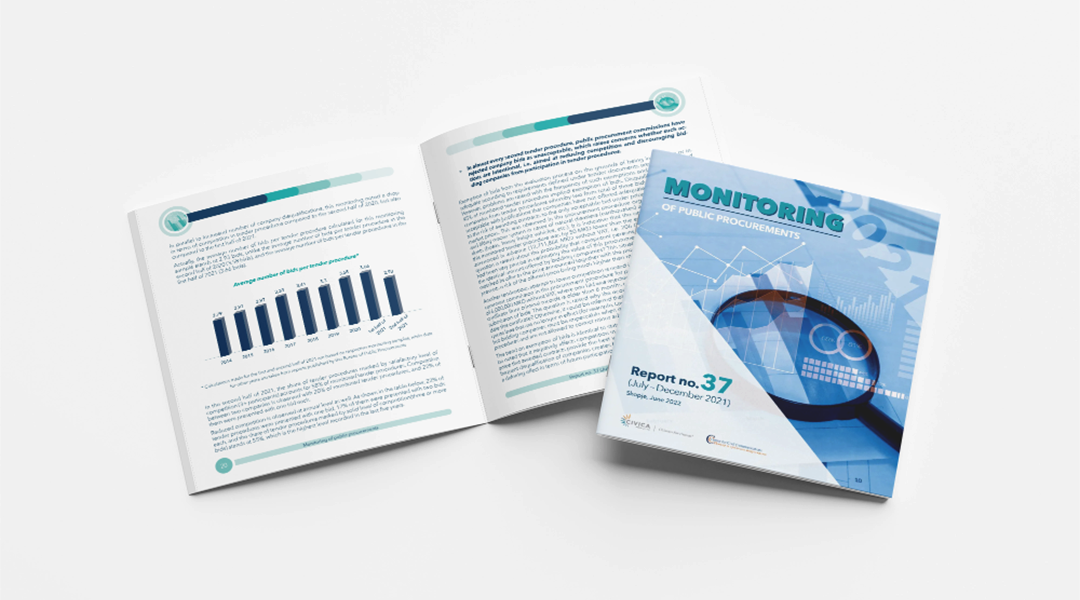
Institutions do not comply with the law-stipulated obligation for publishing notifications on contract performance.
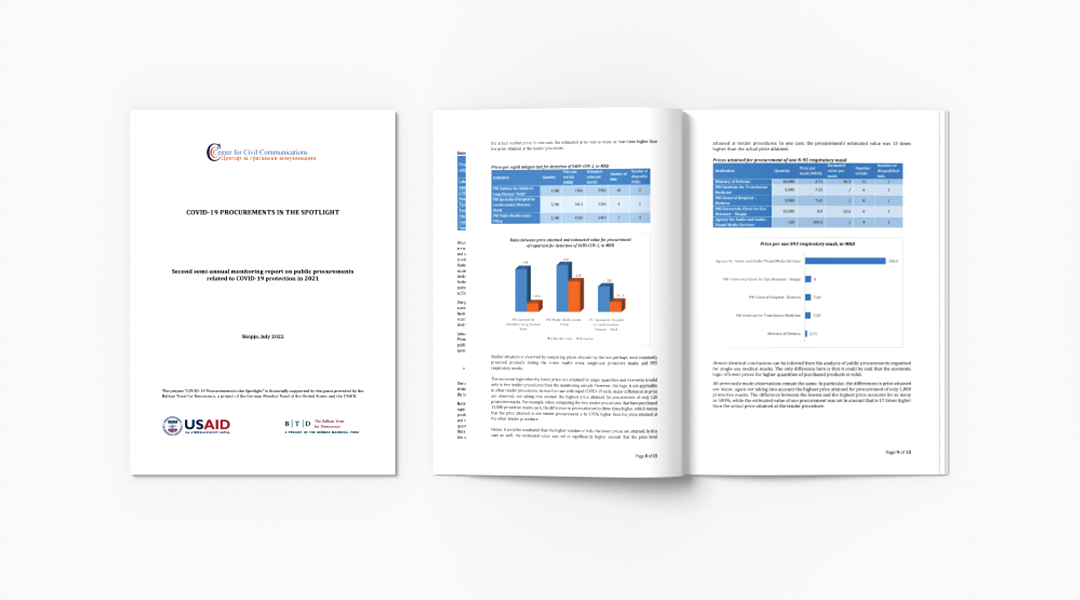
This report is based on in-depth monitoring of 40 public procurements for goods, services and works related to COVID-19 protection whose contracts were awarded in the second half of 2021, i.e. in the period from 1 July to 31 December 2021. Targeted public procurements represent 52% of all COVID-19 tender procedures organized in the analyzed period (total of 77 tender procedures). The value of these tender procedures accounts for 1.25 million euros, i.e. 30.4% of...

Од почетокот на пандемијата во март 2020 година до крајот на 2021 година, во земјата се спровел 581 тендер за КОВИД-19, во вкупна вредност од 33 милиони евра.

Истражувањето покажува дека се набавени нови 142 патнички возила за 3 милиони и 609 илјади евра.

This report is based on in-depth monitoring of 40 public procurements for goods, services and works related to COVID-19 protection whose contracts were awarded in the first half of 2021, i.e. in the period from 1 January to 30 June 2021.

The purpose of the study was to investigate whether a patient hospitalized in various COVID centers in the country was provided with equal medical treatment, in terms of key drugs and medical equipment.
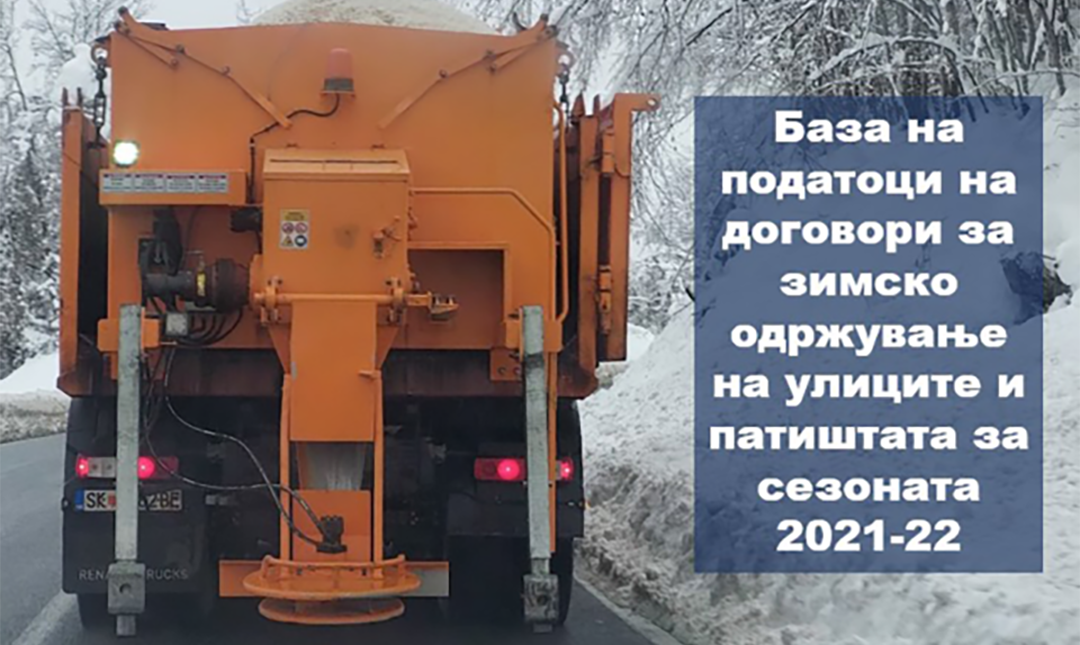
Тендери за зимско одржување на улици и патишта имале 36 општини и Градот Скопје, 6 локални јавни претпријатија, државното јавно претпријатие за одржување и заштита на магистралните и регионалните патишта – Скопје, АД Електрани и Министерството за внатрешни работи.

The monitoring sample includes significant number of tender procedures in which the estimated value was not published in advance, i.e. was not indicated in the procurement notice, but bidders have “ideally” pitched their offer within that amount.
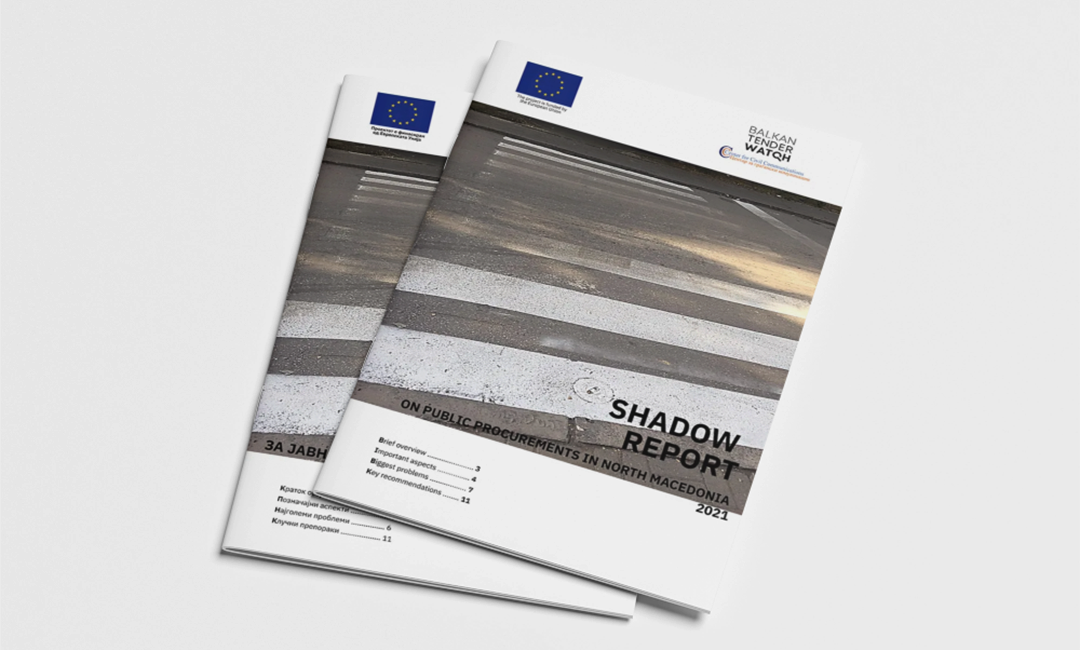
The research can be downloaded in Macedonian and English language In North Macedonia, public procurements are implemented pursuant to the relatively new Law on Public Procurements whose enforcement started in April 2019 and was adopted with a view to align national legislation with EU Directives on Public Procurement and to address numerous shortfalls under the previous legal solution. Having in mind advantages brough about by the new legislation on one hand, and the manner in...

The Center for Civil Communications (CCC) regularly monitors and analyses implementation of public procurements in the country since 2008, i.e. when the Law on Public Procurements drafted in compliance with the European Commission’s Directives entered into effect.
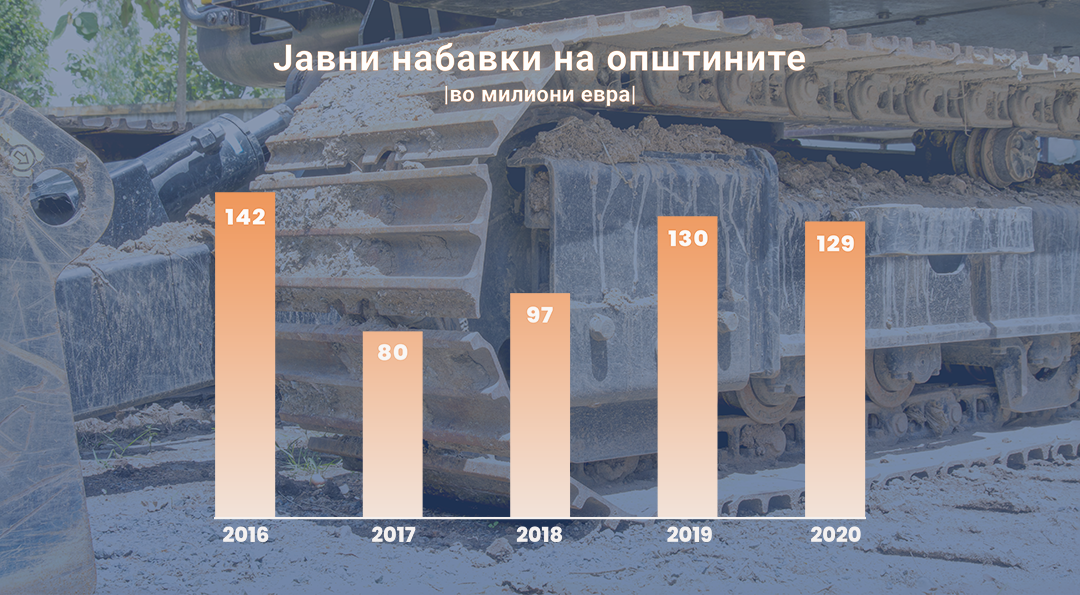
И во кризната 2020 година, општините потрошиле на тендери речиси исто колку и во претходната година

Regular annual shadow report on the state of public procurement in Northern Macedonia.

The Center for Civil Communications has been conducting ad hoc monitoring of COVID-19 related public procurement since the crisis began in March 2020, publishing regular reports with findings and recommendations.

Corruption risks detected are manifested as frequent and significant changes to public procurement plans, but also poor implementation rate of these plans.

Transparency of public procurements falls below the level anticipated under the new Law on Public Procurements.
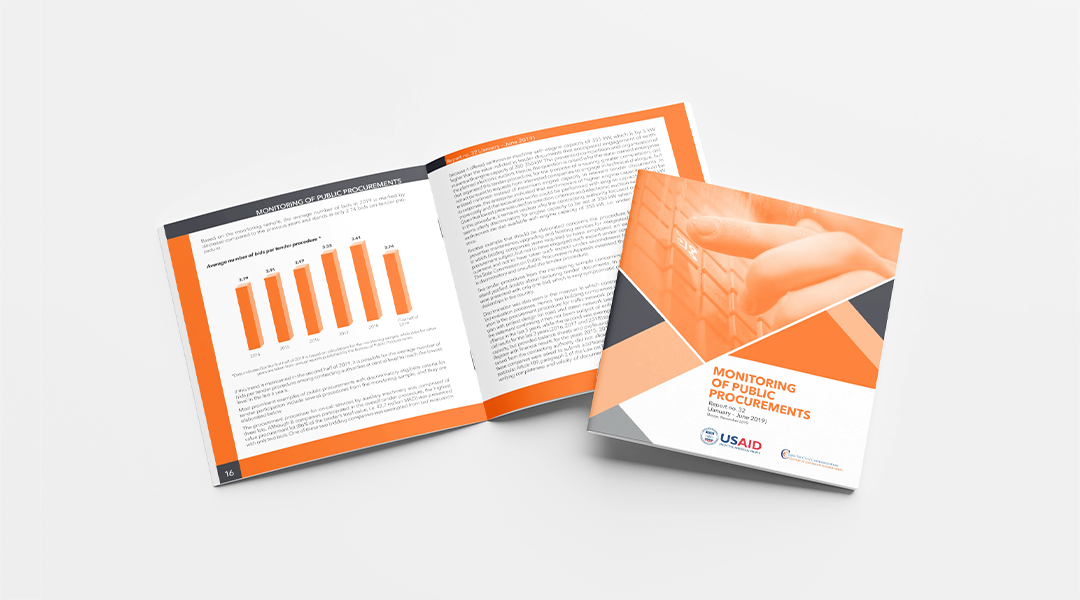
Old habits – stronger than the new Law on Public Procurement.
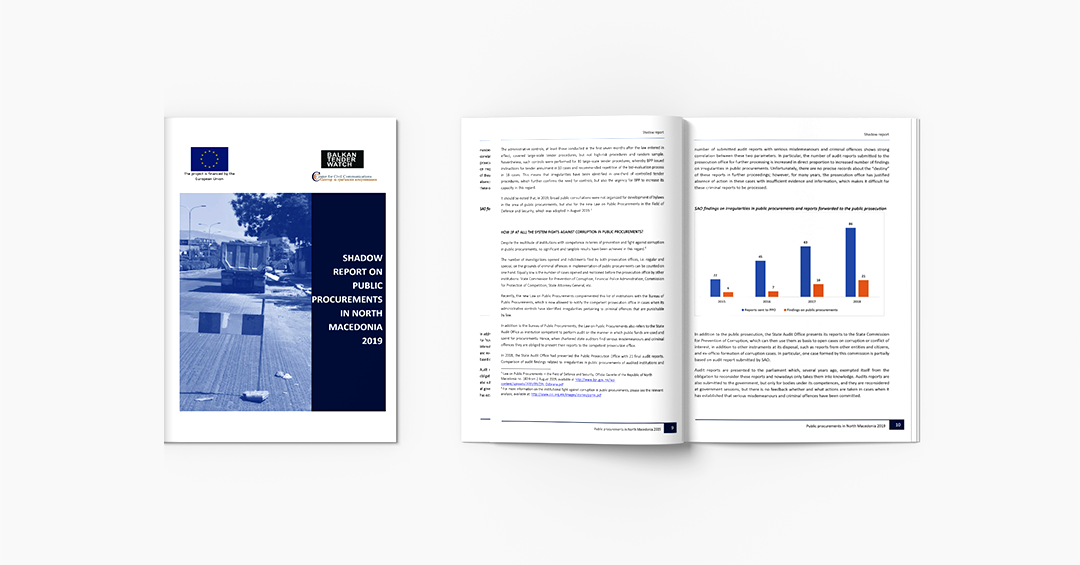
After criticism from all stakeholders, the old and non-functional Law on Public Procurements – adopted in 2008 and frequently amended thereafter - is finally replaced with completely new law, which was adopted in January 2019 and entered into effect on 1 April 2019.
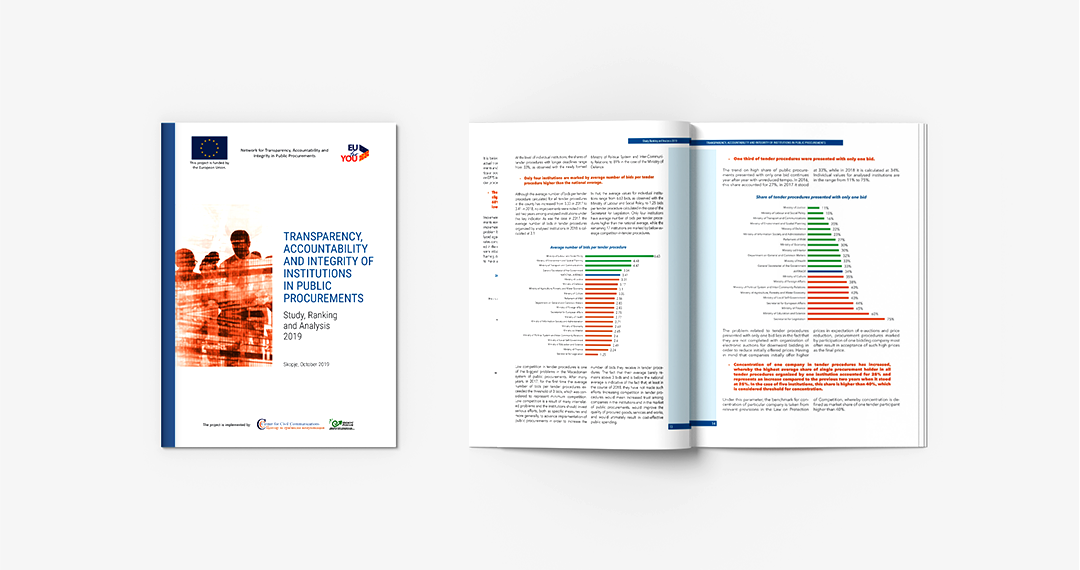
Research, ranking and analysis of transparency, accountability and integrity of Macedonian institutions in public procurement.
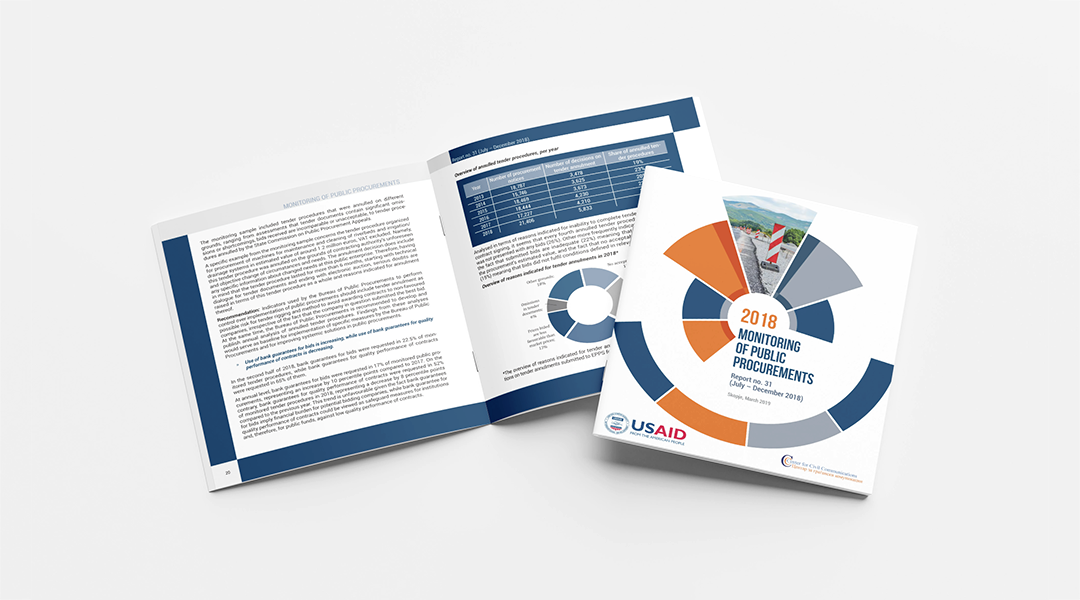
Monitoring activities observed frequent practices on non-dividing tender procedures of large scope into lots, which prevents competition among companies and consequently brings under question cost-effective and efficient use of public funds.
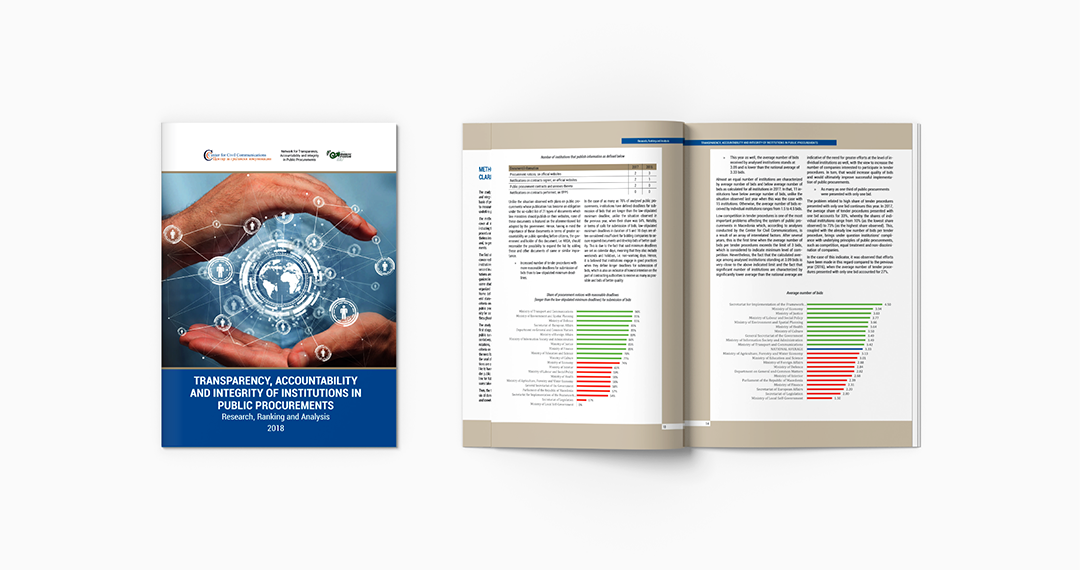
Research, ranking and analysis of transparency, accountability and integrity of Macedonian institutions in public procurement.
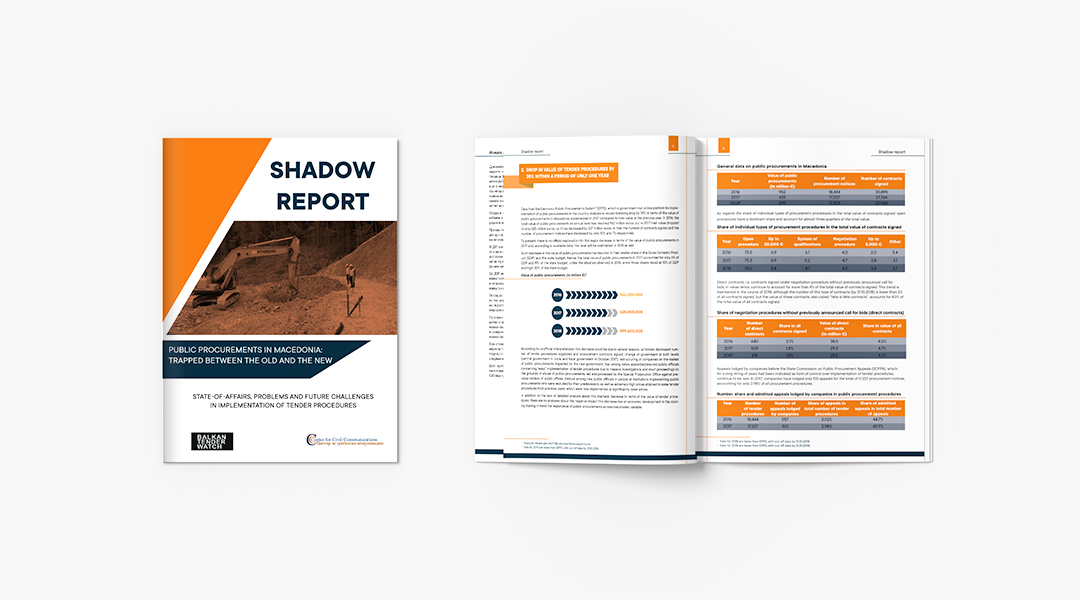
In 2018, state-of-affairs related to public procurements in Macedonia are still trapped between the valid “old” and heavily criticized Law on Public Procurements and the already drafted “new” law that should “correct” matters, but is still pending enactment by the Parliament of the Republic of Macedonia.
Low competition on local tenders.
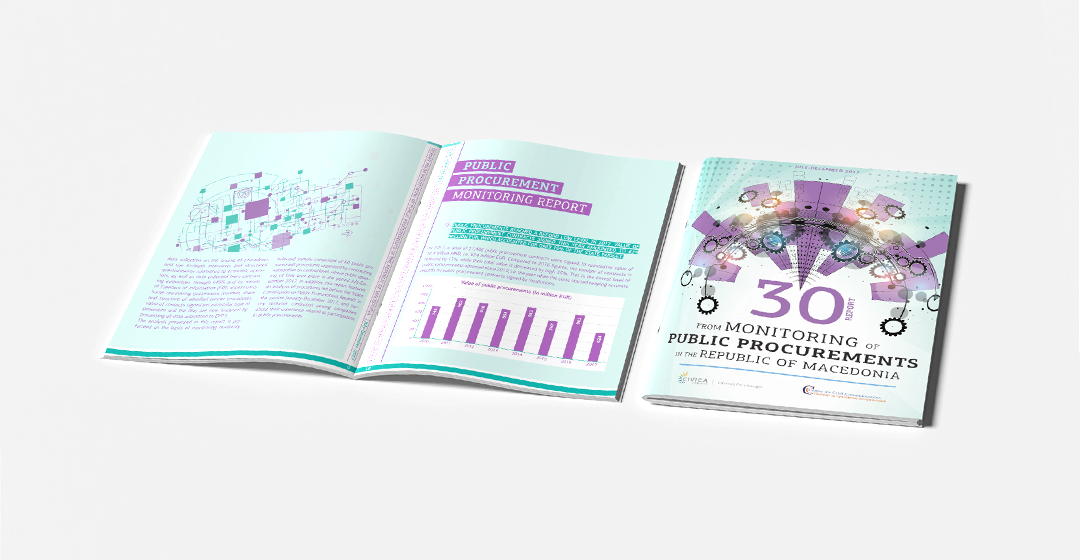
‘Lowest price’ defined as single criterion to award public procurement contracts, delayed payment for contract performance and requirements related to voluminous documents for tender participation are the main problems in public procurements indicated by the companies.
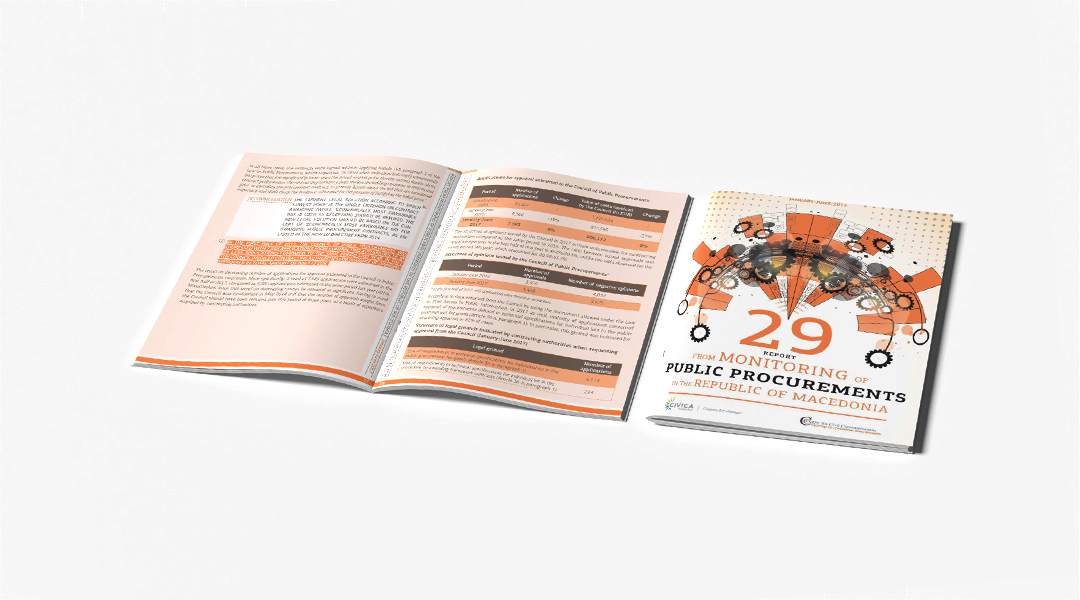
As many as 35% of monitored tender procedures have rejected a number of bids as unacceptable. This additionally hinders competition in tender procedures.
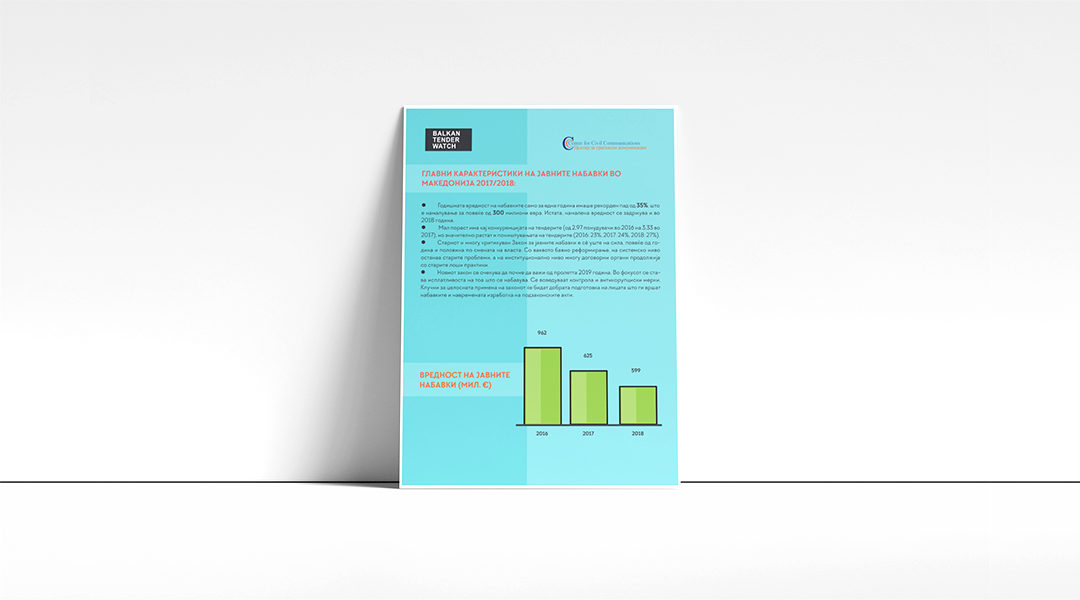
Сумирани информации за главните карактеристики на јавните набавки во земјава за 2017/2018, борбата против корупцијата во јавните набавки, како и споредбени показатели и трендови за земјите од регионот.
1/3 of local tender procedures were presented with only one bid or no bids
Almost every third tender procedure is marked by participation of one bidding company.
Market research for technical specifications is mission impossible, same as obtaining approval from the council in first attempt.
The mechanism established in terms of market research and obtaining approval from the council of public procurements does not yield expected effects.
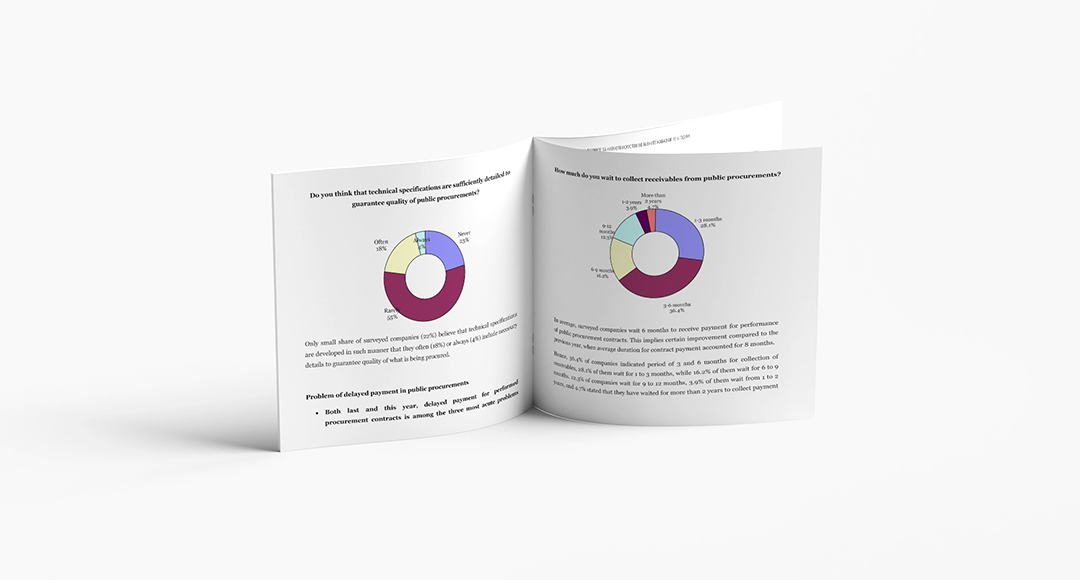
The research among companies related to their experience from participation in public procurement procedures was conducted in the period November - December 2016. It targeted a total of 230 companies from all bigger towns across the country.
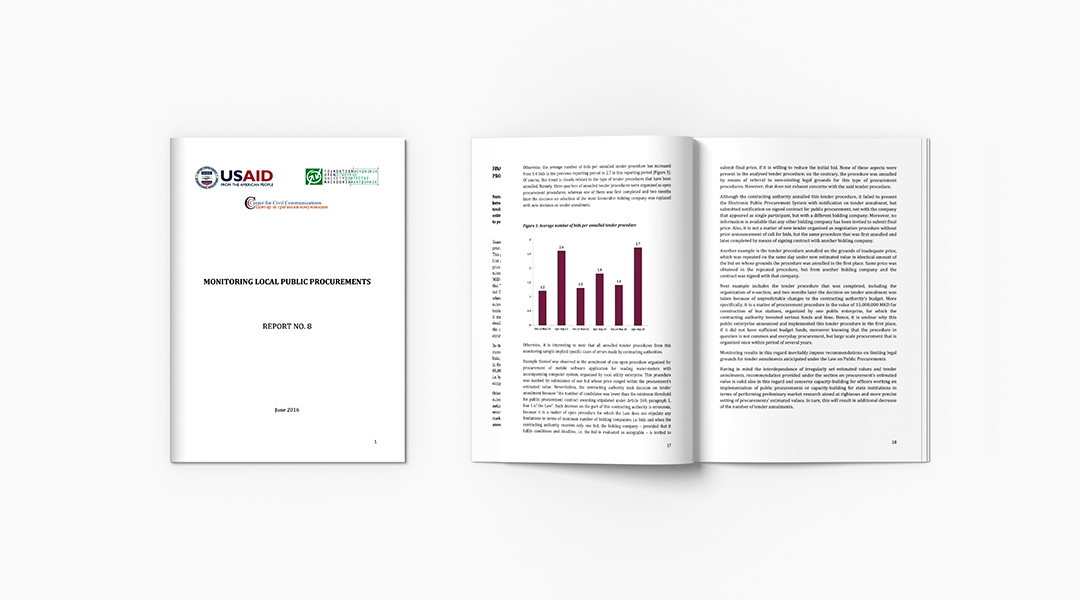
On average, tender procedures are marked by participation of 2.5 bidding companies, while e-auctions are marked by 2 participants.
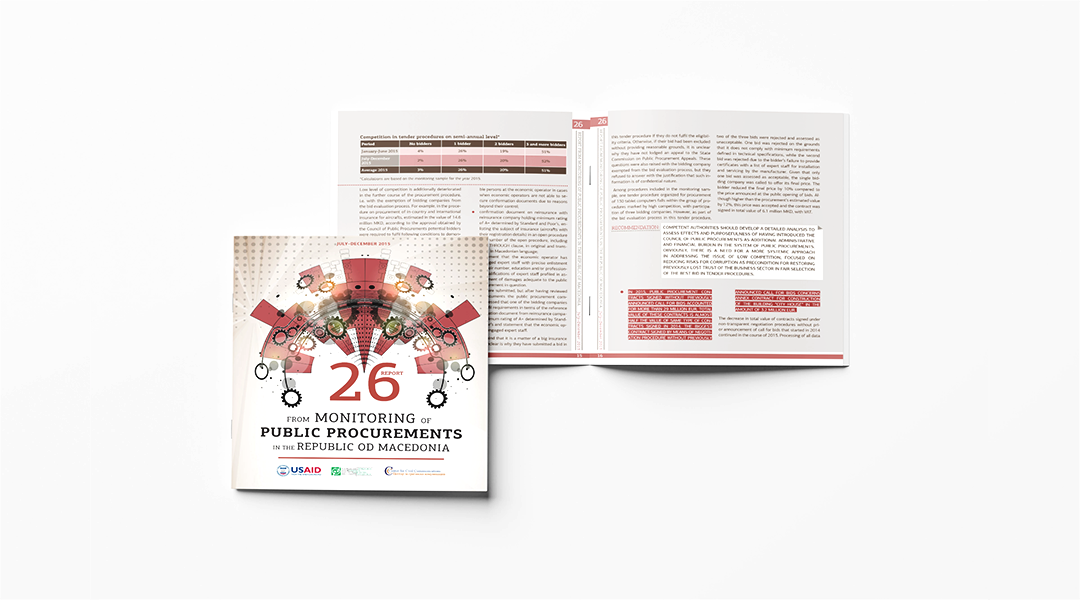
Lowest price and delayed payment for contract performance create the biggest problems for companies participating in public procurements.
Continued decline of already low competition in local tender procedures.

Competition in tenders remains low.
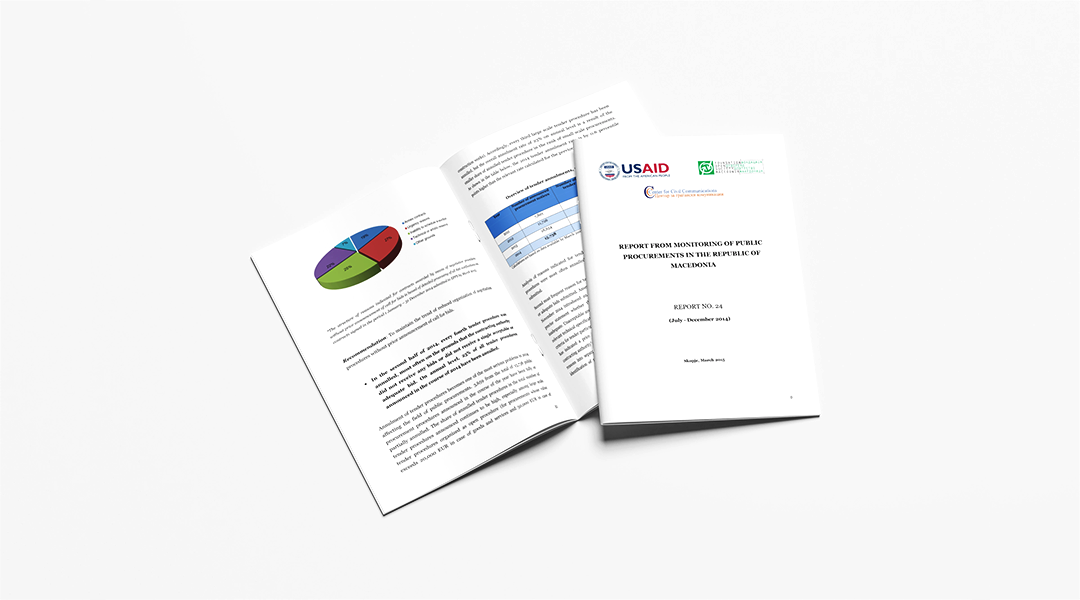
In the first months of its operation, the Council of Public Procurements increased the administrative burden in implementation of tender procedures, but not the competition therein.
Dominant share of surveyed companies believe that e-auctions result in attainment of unrealistically low prices, whereby quality is disregarded on the account of procurement prices.
Significant share of bids submitted in tender procedures do not reach the bidevaluation stage. In that, reasons indicated for rejection of bids include administrative shortcomings of bids submitted and failure to fulfil requirements defined in relevant tender documents (eligibility criteria and terms and conditions defined in tender specifications).
There are no translations available. Само во првиот квартал од 2014 година, преку постапката со преговарање без претходно објавување оглас се склучени 228 договори во вредност од 19,3 милиони евра.
Six years have passed from the entry in effect of the Law on Public Procurements (LPP), but some institutions continue to act contrary to the legal provisions contained therein and companies are still unaware of their rights related to legal remedies.
Almost one third of tender procedures from the monitoring sample have been completed with awarding the procurement contract to the single bidding company that participated therein.
Some institutions do not comply with their law-mandated obligation on consulting the companies from the relevant industry when drafting the technical specifications for public procurements whose value exceeds 130,000 EUR, i.e. to engage in so-called technical dialogue.
Every fourth public procurement contract from the monitoring sample was signed in a tender procedure with only one bidding company. Lack of competition among companies results in no guarantees that public funds are spent for quality goods and services offered at favourable, competitive prices.

Although mandated by law, e-auctions were not scheduled in 40% of procedures from the monitoring sample, whereas every fourth e-auction that was organized did not result in decrease of initially-bided prices.
The annulment problem is increasingly intensified for the larger tender procedures, that is, so-called open procedures for procurement of goods and service in the amount over EUR 20,000 and for works implementation in the amount over EUR 50,000.
The biggest issues in public procurements, according to the company survey, are the late payments on the part of the institutions for realized procurements, favoring and vague tender documentations, as well as the unrealistically laid down and difficult to meet bidding criteria for companies. These are part of the findings of the research conducted among 220 companies in 15 cities throughout Macedonia.
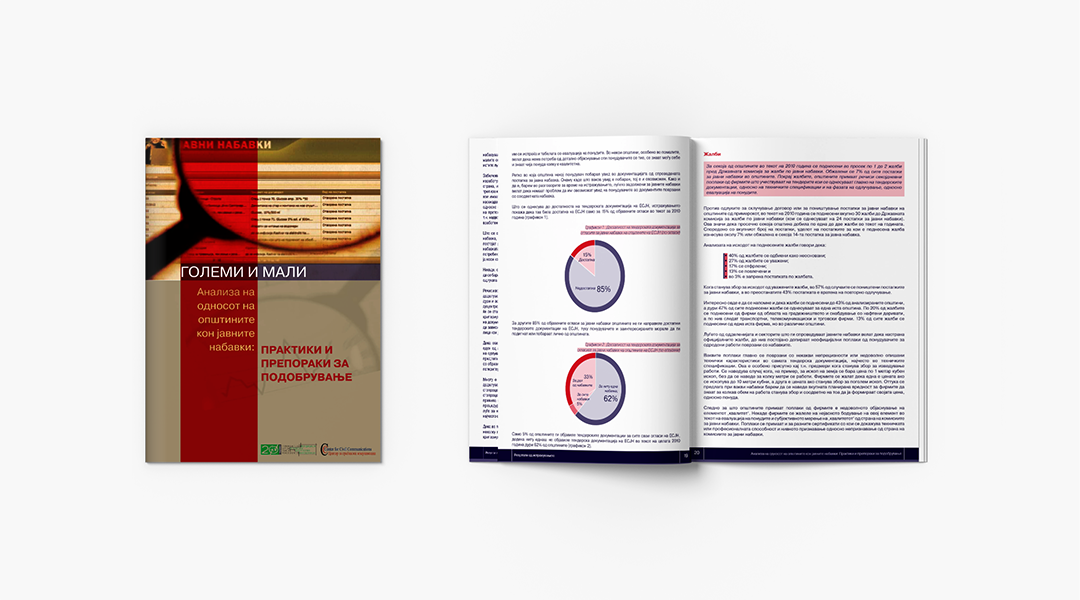
There are no translations available. Во значаен дел од мониторираните тендери на фирмите им се бараат годишни приходи кои се од 10 до 27 пати поголеми од вредноста на набавката.
The Center for Civil Communications organised a second workshop on July 4 to discuss crucial measures necessary to decrease the level of corruption, this time with focus on public enterprises and institutions.
There are no translations available. Загрижувачки е што во доминантен дел од мониторираните постапки за јавни набавки, поништувањата следуваа токму во тендери на кои учествувале голем број понудувачи.
On 2 October, the Center for Civil Communications submitted proposal measures for narrowing the room for corruption in the illegal construction to the authorized institutions and media in the country. The measures were suggested and discussed at the third workshop, which was organized by the Center during the month of September.The proposed measures were mainly in the direction of: strengthening and intensifying the inspection controls; more efficient dealing with and sanctioning the problem of illegal construction, as well as increasing the risk and lack of prospects for illegal construction.
Third Quarterly Report 2011 The present analysis was performed based on monitoring of selected sample of 40 public procurement procedures implemented by central level contracting authorities, whose public opening of bids took place in the period July – September 2011. In that, the analysis also considered data obtained from the Electronic Public Procurement System.
The analysis of the public procurement process in the Republic of Macedonia was performed based on the monitoring of randomly selected sample of public procurementprocedures (40 per quarter). Monitoring activities start with the publication of calls for bids in the “Official Gazette of theRepublic of Macedonia”, followed by attendance on public opening of bids and data collection on the procedure course,and use in-depth interviews and structured questionnaires submitted to the economic operators, as well as data obtained from contracting authorities by means of Freedomof Information (FOI) applications. The present analysis was performed based on monitoringof selected sample of 40 public procurement proceduresimplemented by central level contracting authorities, whosepublic opening of bids took place in the period April – June 2011.
First Quarterly Report 2011 The present analysis was performed based on monitoringof selected sample of 40 public procurement proceduresimplemented by central level contracting authorities, whosepublic opening of bids took place in the period January –March 2011.
Bearing in mind the great role media play in the fight against corruption and in increasing the transparency and accountability of the public institutions, the Center for Civil Communications hopes that, through highlighting the existing forms of corruption and promoting investigative techniques, will contribute to increasing the interest of journalists and media for investigating corruption. For that purpose, the Center, in December 2007, published a manual for journalists for investigating and reporting on corruption, which points to the consequences of corruption and the role of the media in its suppression.
Eligibility criteria for companies to participate intender procedures limit competition and favour certain bidders.
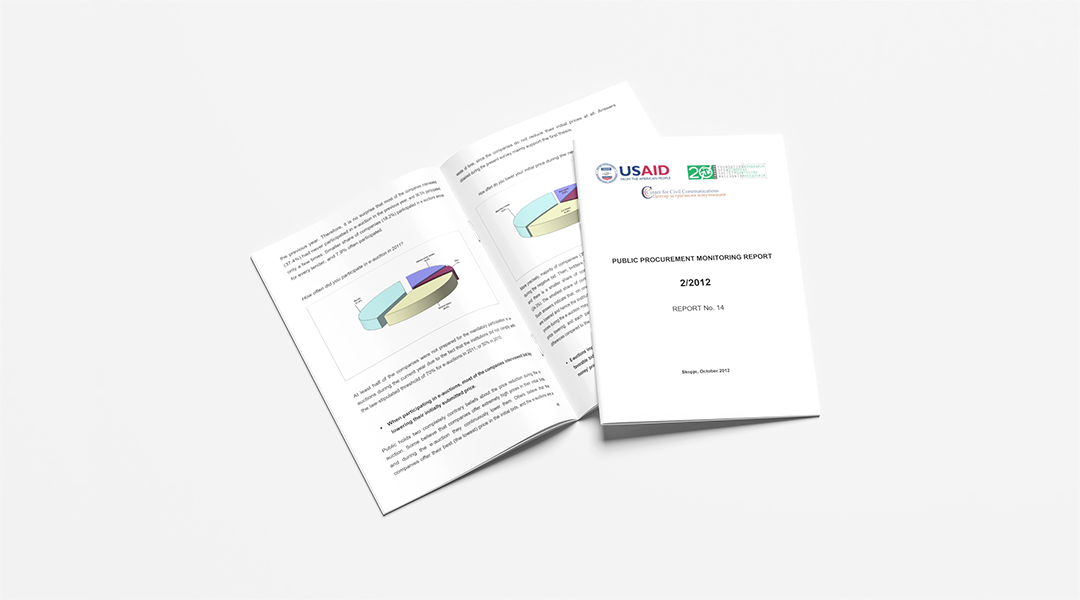
The Center for Civil Communications published the results from the regular public procurements monitoring in the country and the results from the survey of companies about their experience with the public procurement procedures.
The annual report summarizes the monitoring results and reiterates the 10 key findings common for the previous four quarterly monitoring reports. The report also provides the key recommendations aimed to amend the relevant legislation and/or to improve the enforcement thereof.